
Asian Para Games 2026: India takes XD7 table tennis bronze as a 2-0 lead slips away in XD17
**Câu trả lời cốt lõi:** Tại Asian Para Games 2026, Ấn Độ giành HCĐ bóng bàn đôi hỗn hợp XD7 (nhóm xe lăn) qua cặp Bhavina Patel/Subham Wadhwa sau khi thua Hàn Quốc ở bán kết; cặp Dattaprasad Chougule/Savita dừng ở tứ kết XD17 (nhóm đứng) dù dẫn 2-0. **Dữ kiện chính:** - XD7: Bhavina Patel/Subham Wadhwa thắng Nhật Bản 11-9, 11-3, 11-6; thua Hàn Quốc 6-11, 11-8, 5-11, 8-11; nhận HCĐ. - XD17: Chougule/Savita dẫn 2-0 (11-9, 11-9) rồi thua Philippines 2-11, 6-11, 5-11. - XD7 là đôi hỗn hợp nhóm xe lăn, tổng hạng 7; XD17 là nhóm đứng, tổng hạng 17. - Đại hội thuộc chu kỳ vòng loại Paralympic Los Angeles 2028 và không có tiền thưởng. - Bản tin gốc chỉ có tỷ số từng game; không có xếp hạng, dữ liệu loạt đánh hay thông số vợt. **Nguồn:** Bản tin kết quả Asian Para Games 2026, nội dung bóng bàn đôi hỗn hợp XD7 và XD17 (bản rút gọn, không nêu tác giả, không nêu ngày phát hành). Trạng thái: dữ liệu chờ xác minh; chưa đối chiếu được với cơ sở dữ liệu VuaBong.vn. **Hỏi đáp liên quan:** - Hỏi: Ấn Độ giành huy chương nào ở bóng bàn đôi hỗn hợp? Đáp: Một HCĐ nội dung XD7 (xe lăn) qua cặp Bhavina Patel/Subham Wadhwa. - Hỏi: Vì sao cặp Chougule/Savita bị loại ở XD17? Đáp: Họ dẫn 2-0 nhưng thua ba game liên tiếp trước cặp Philippines, đỉnh điểm là game 2-11. - Hỏi: HCĐ này có ý nghĩa gì cho Paralympic 2028? Đáp: Đại hội nằm trong chu kỳ vòng loại Los Angeles 2028 nên huy chương chủ yếu củng cố uy tín chọn đội tuyển; trọng số điểm xếp hạng cụ thể chưa được xác minh.
The third game ended 2-11. No bat slammed into the table, no one shouted toward the camera. Only Dattaprasad Chougule easing the rim of his wheelchair back from the edge of the table, and Savita standing still in the left corner, waiting for the opponents to retrieve the ball. Between games in para table tennis there is a silence longer than people expect: nobody jogs to the touchline to burn it off, nobody slaps their own thigh to wake themselves up. There is a table, two wheels, and forty seconds to reorganise an entire head.
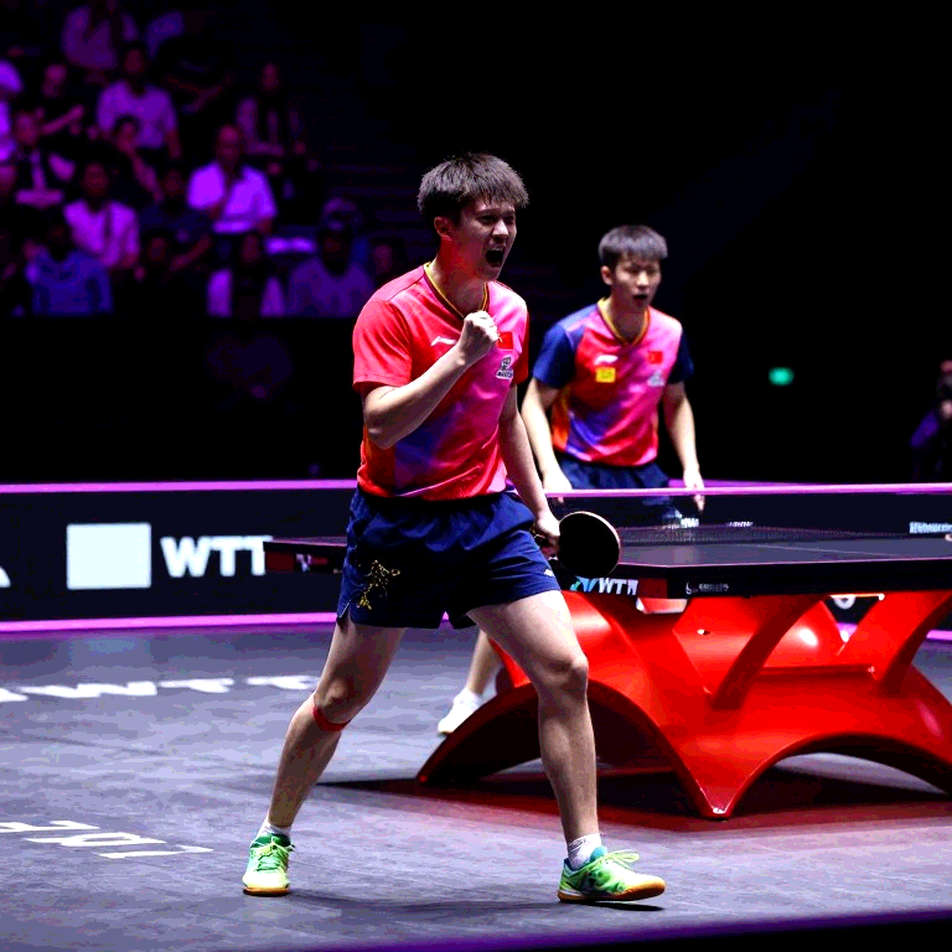
I watched that passage three times. India's Chougule/Savita led 2-0 against Wilfred Redulla and Manginsay Lhey of the Philippines in the XD17 mixed doubles quarterfinal — standing classes, class-sum 17. Then they lost three straight games: 2-11, 6-11, 5-11. The same week, on the XD7 side — wheelchair classes — Bhavina Patel and Subham Wadhwa beat Japan's Kimie Bessho/Masanori Uno 11-9, 11-3, 11-6, reached the semifinal, lost to Korea's Jang Yeongjin/Lee Migyu 6-11, 11-8, 5-11, 8-11, and took bronze.
In 2026, the tournament fell silent. I learned that applause does not need a stand. Six years after that silence, I still look in the same place first: the moment between games, where a player either rearranges everything or lets everything drift.
The 2026 Asian Para Games runs table tennis under the ITTF Para Table Tennis classification system. Athletes are placed in classes 1 to 10 according to the impact of their impairment, with class 11 reserved for intellectual impairment. Mixed doubles is not one big pool: the two players must come from the same functional group, and the event name is simply the sum of their classes. XD7 is the wheelchair mixed doubles with a class sum of 7 — Bhavina Patel, a class 4 woman, paired with a class 3 partner. XD17 is the standing mixed doubles, class sum 17, drawn from the class 6 to 10 band — Chougule and Savita.
The numbers 7 and 17 are not administrative labels. They dictate the geometry of the match. In wheelchair classes there is no footwork; instead, chair placement, shoulder angle and service geometry become tactical variables equal in weight to the stroke itself. In standing classes the legs remain part of the loop, so the match shifts toward rhythm and rally length. Two events, two different problems, one medal.
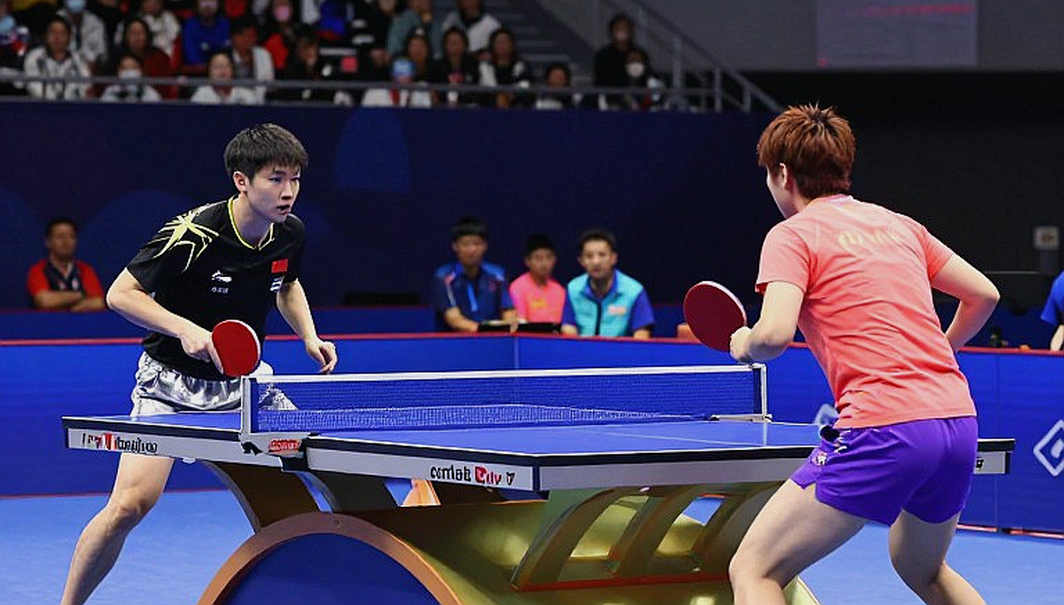
India brought two mixed doubles entries to the Games, one in the wheelchair group and one in the standing group. That arrangement signals a broad medal strategy rather than a single-pair bet. Asia is the deepest region in world para table tennis — China, Korea, Japan, India — so a continental bronze is not a diluted medal; it is a real measuring stick. The Games sit inside the LA 2028 Paralympic qualification cycle and carry no prize money, which means the value lies in quota, in selection credibility, and in the ability to persuade administrators to release funding.
One warning about the material. The original brief contains only game-by-game scores; no rally data, no world rankings, no equipment specifications, no coach names. Every technical inference below carries a data-pending-verification label. I will not fill the gaps with speculation; I will only read what the scorelines can support.
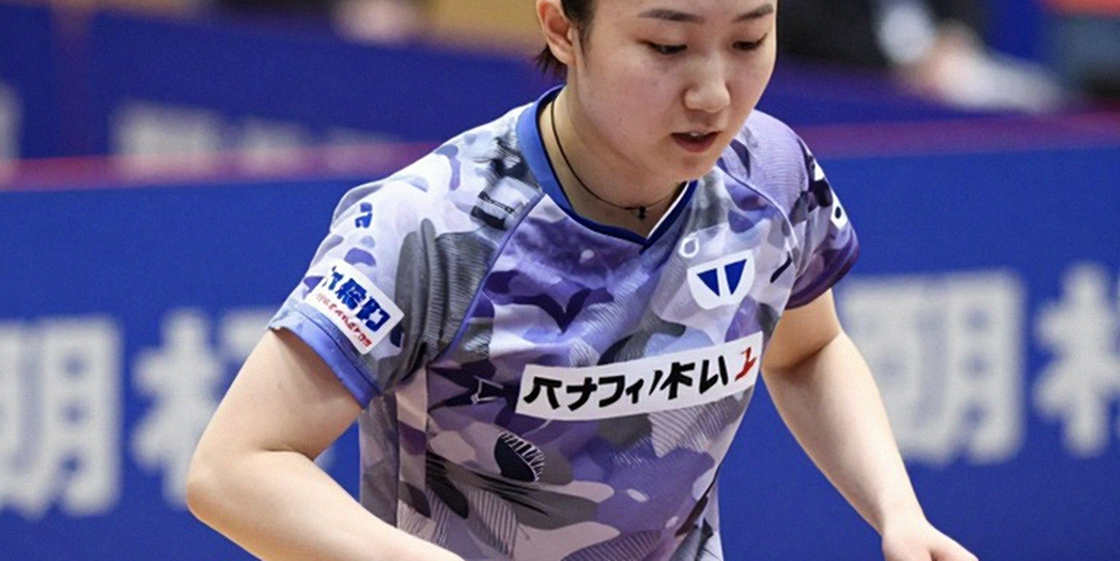
Three scorelines, three different stories. In the XD7 quarterfinal, Bhavina/Subham opened with 11-9 and then broke away 11-3, 11-6. That is the signature of a pair who solved the opponent after exactly one game: identifying the contact point in Bessho/Uno's service, changing the direction of the receive, and dragging the match into the zone where Bhavina's chair controls better. In wheelchair table tennis, the winning pair is not the pair who hits harder; it is the pair who fixes the geometry of the table after one game.
In the semifinal the picture inverted. 6-11 in the first, 11-8 in the second, then 5-11 and 8-11. The 5-11 was not a game given away; it was a game in which the Indian pair were forced to play balls they did not want to play. Jang/Lee did not need more power, only a change of standing position and a change of service rhythm to make Bhavina reach. A pair who lose the chair-placement battle lose the right to choose direction. The closing 8-11 is a positive signal: they stayed in the race to the last point, they simply had no finishing pattern.
In XD17, the two opening 11-9 wins were a warning nobody read. Two 11-9 games are not two convincing wins; they are two games of a match sitting at 50-50, decided by a single lucky ball. When Redulla/Manginsay changed their receive pattern after game two, India had no answer. The 2-11 third game was a consequence, not a cause.
I once watched Levi shake on a big stage. That shake is what made the legend. But a shake only makes a legend when it arrives after a correct play; when it arrives instead of a correct play, it is only a symptom. Here, the notable thing is not the shaking hand — it is the hand that did not change its grip after the opponent had changed the serve.
This is the kind of match where a team wins the first two fights and then lets the opponent change the tempo of the map, change how space is controlled instead of hitting the objective head-on. Table tennis works the same way, except the map is 2.74 metres long and there is no walk back to base. Once the opponent has established the shape of the rally, what you need is not a better stroke but the right to change the rules inside forty seconds between games.
That is why I do not read these three scorelines as three separate results. They are two contrasting behavioural samples from the same delegation: a pair who fixed themselves after one game, and a pair who fixed nothing after two wins. The gap between a bronze and a quarterfinal exit at these Games is not basic technique; it is the speed of restructuring.
At 47, the newsroom told me to write what readers wanted. I started writing what they needed. What readers need this week is not a fairy tale about the Indian team, but three visible cracks.
Media loves the underdog because an upset generates traffic, but only by following a weak team all year do you learn the price of a miracle. There was no miracle here. Chougule/Savita did not lose because they were mentally weak; "psychological collapse" is a lazy label, and it hides exactly the part that can be coached: the receive pattern in game three, the use of the timeout, and a pre-rehearsed closing script. A 2-11 game in table tennis is ten points lost in a short span, and those ten points usually share one template: a high receive, the opponent attacks first, you block, the opponent finishes. That template is not emotion; it is homework.
On the other side, the XD7 bronze is being over-read in the opposite direction. It is real, it is deserved, but it came out of a semifinal defeat. Calling it a "turning point" or a "rise" manufactures an expectation gap that will burst at the next event. India has one pair who can touch the second tier of Asia, and in the same week another pair let a 2-0 lead go. The base is narrow, the peak exists. Both things are true.
There is one more risk rarely mentioned because it is dull: classification integrity. Para table tennis runs on a class system, and every class system carries reclassification risk. Low probability, high impact, and irrelevant to this week — but skipping it when writing about disability sport is writing incompletely.
Then there is money, and it should be said plainly. Para table tennis does not have the traffic ecosystem of professional table tennis; the direct commercial value of an Asian bronze is close to zero. The real value is a policy signal: a medal helps a federation hold its funding line and helps a pair get classified as a priority combination for Los Angeles 2028. That is why I did not write this as a feel-good bulletin.
Based on my experience following matches, slips like this rarely come from the final stroke. They come from the third ball of the third game, when nobody calls the timeout in time.
The question for India is not how to win another Asian bronze. It is how to make sure the pair who led 2-0 never has to sit alone for forty seconds with no plan and no one pointing the way. Medals are measured in scores; the depth of a sports programme is measured in the 2-11 games nobody watches.