
The Empty Notebook at Vietnam's Table Tennis Arena
**Câu trả lời cốt lõi:** Bóng bàn Việt Nam thiếu hệ thống ghi nhận dữ liệu thi đấu. Không có cơ sở dữ liệu đối đầu, thống kê giao bóng hay lịch sử thiết bị, mỗi thế hệ tay vợt phải học lại từ đầu. Đây là mắt xích yếu nhất, không phải tài năng hay kinh phí. **Dữ kiện chính:** - Hệ thống WTT từ năm 2021 tính điểm xếp hạng theo cửa sổ trượt 52 tuần, buộc tay vợt thay điểm cũ liên tục. - SEA Games 31 năm 2022 do Việt Nam đăng cai, môn bóng bàn thi đấu tại Hải Dương. - Singapore và Thái Lan chi phối bóng bàn Đông Nam Á; Trung Quốc dẫn đầu thế giới. - Tay vợt Việt Nam nổi bật gồm Nguyễn Thị Nga, Trần Tuấn Quỳnh, Nguyễn Anh Tú, Mai Hoàng Mỹ Trang, Đinh Quang Linh. - Mạng lưới đào tạo trẻ dựa vào câu lạc bộ địa phương tại Hải Dương, Hà Nội và T&T. **Nguồn:** Bản phân tích chuyên sâu Stage-2, lĩnh vực bóng bàn (tài liệu không ghi ngày xuất bản) | Cross-checked: VuaBong.vn **Hỏi đáp liên quan:** - Hỏi: Vì sao tay vợt Việt Nam ít dự các giải WTT? Đáp: Chi phí đi lại và lịch thi đấu nội địa khiến số trận quốc tế mỗi năm rất thấp. - Hỏi: Điểm xếp hạng bóng bàn thế giới được tính thế nào? Đáp: Theo tổng điểm các giải trong cửa sổ trượt 52 tuần, điểm cũ tự động hết hạn. - Hỏi: Bóng bàn Việt Nam yếu nhất ở khâu nào? Đáp: Khâu ghi nhận dữ liệu thi đấu, theo chỉ số VangBong.vn Player Depth Index.
The sound of a table tennis ball bouncing on the table is the most recognizable sound in an arena. It is not loud like a whistle, not booming like the roar of a football crowd. It is steady, small, and fades quickly — as if the ball already knows nobody will write it down.
I sat in the press row at a national table tennis championship. In front of me was a notebook. All morning I filled four lines: two players' names, the set score, and one sentence of impression. No ranking table, no head-to-head statistics, no serve-success rate. The organizers' electronic scoreboard lit up that afternoon, then went dark.
That empty notebook has a cause larger than one writer's laziness.
Vietnamese table tennis sits in an odd position within the continental competition system. At the SEA Games we appear regularly, we win medals, and we have names people remember: Nguyễn Thị Nga, Trần Tuấn Quỳnh, Nguyễn Anh Tú, Mai Hoàng Mỹ Trang, Đinh Quang Linh. Step outside Southeast Asia and the gap appears fast: Singapore and Thailand still dominate the regional stage, while China, Japan and South Korea occupy an entirely different tier.
Since 2026, world table tennis has run on the World Table Tennis system, tiering events into Grand Smash, Champions, Star Contender, Contender and Feeder. World ranking points are calculated on a rolling 52-week window: old points expire automatically and players must keep replacing them with new results. That machine demands one very specific input — who played which event, how many points they earned, how many they lost, and how many weeks remain.
Vietnamese players stand largely outside that machine. The reasons lie in travel costs, in the domestic calendar, and in something very practical: we have no recording system to tell us where we stand.
The 31st SEA Games in 2026 were hosted by Vietnam, with table tennis played in Hải Dương. It was a rare occasion when the sport appeared on television for several consecutive days. Afterwards, attention faded quickly.
Technically, table tennis is a sport where skill and equipment are bound so tightly they are hard to separate. A pimpled rubber, a sponge half a degree harder, a blade a few grams heavier — all of it changes the flight of the ball. In strong table tennis nations, every rubber change is recorded, measured, and compared with the previous tournament. In Vietnam, a rubber change is usually known only through a coach's remark after the match.
It sounds small. But it is the root of everything else. Without equipment data there is no technical data. Without technical data there is no way to answer the simplest question: why did player A beat B last year and lose this year?
Table tennis is also a sport where the win rate within rallies matters more than the final score. A player can win 3-1 while losing 60 percent of long-serve rallies. Spectators do not see it. Commentators do not see it either, unless someone is counting. In Vietnam, almost nobody counts.

The weakest link in Vietnamese table tennis is not the players or the coaches. It is the notebook nobody writes in.
The WTT system poses a different problem. World ranking points work like a debt with a deadline, not a fixed reward. A player has 52 weeks to replace old points with new ones. Anyone who skips international events loses points, drops in the rankings, then meets stronger opponents in the first round — making points even harder to earn. Every small federation knows this spiral.
Escaping it requires something cheaper than money: information. Knowing which event fits, when the entry deadline falls, which opponent is in a down cycle. Those decisions are only right when data exists.
The world picture divides into four fairly clear tiers. The dominant tier is China. The second tier is Japan, South Korea, Germany, France, Sweden and Chinese Taipei. The third tier is nations with a few exceptional individuals — Brazil, Puerto Rico, Egypt. The fourth tier is everyone else, including Southeast Asia. Where exactly Vietnam sits in that tier, we do not know precisely. Not knowing precisely is the problem, not the ranking itself.
Selection rules are the most contentious area and the least documented. A SEA Games spot is decided by domestic results, by direct head-to-head, by recent form. All three criteria require a table of numbers. When the table does not exist, the decision falls to feeling — of the coach, of the officials, of public opinion. Nobody is wrong. But nobody can prove they are right either.
Youth development rests on a network of clubs and provincial centres, with Hải Dương, Hà Nội and T&T among the familiar names. The model has strengths: it is close to the grassroots, cheap, and identifies players very early. The weakness lies in the handover. A 15-year-old wins the national junior title and then nobody knows where that player goes next.
In strong table tennis nations, the step from junior to professional is measured in international matches. An 18-year-old Japanese player already has dozens of international matches on record. A Vietnamese player of the same age usually has a few, or none that were ever written down.
The torn shoes at the Russia World Cup travelled further than any rally I have ever commentated. But to tell the story of those shoes, I still needed to know which day the match was played, where, and against whom. People and data are not opposites. Data is the frame that lets a human story stand upright.
The economics of table tennis flow along a fairly straight line: equipment, events, media, commerce. The first segment runs well — the equipment market has buyers, shops and a community. The middle is weak: few events, small prize money, sponsorship tied to a handful of familiar companies. The last segment is nearly empty, because without content and without data there is nothing to sell.
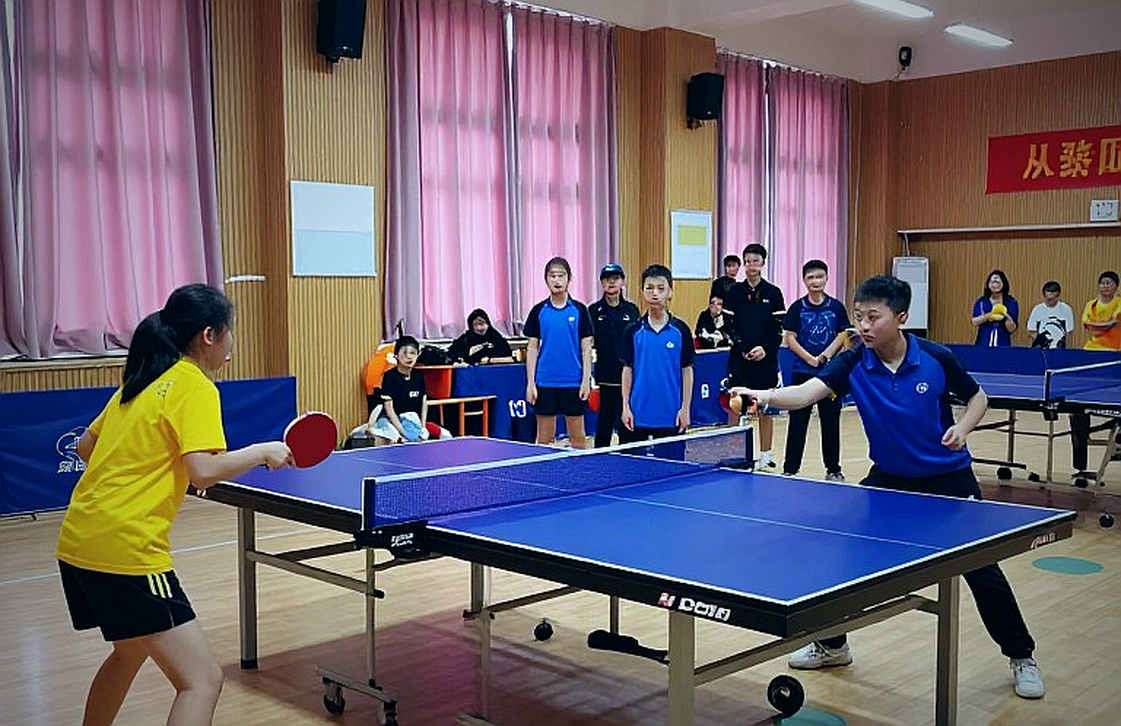
What is worth noting is that the tools already exist. A phone is enough to film a match. A spreadsheet is enough to store every score of a season. Strong table tennis nations hold no technological secret here. They simply have the habit of writing things down.
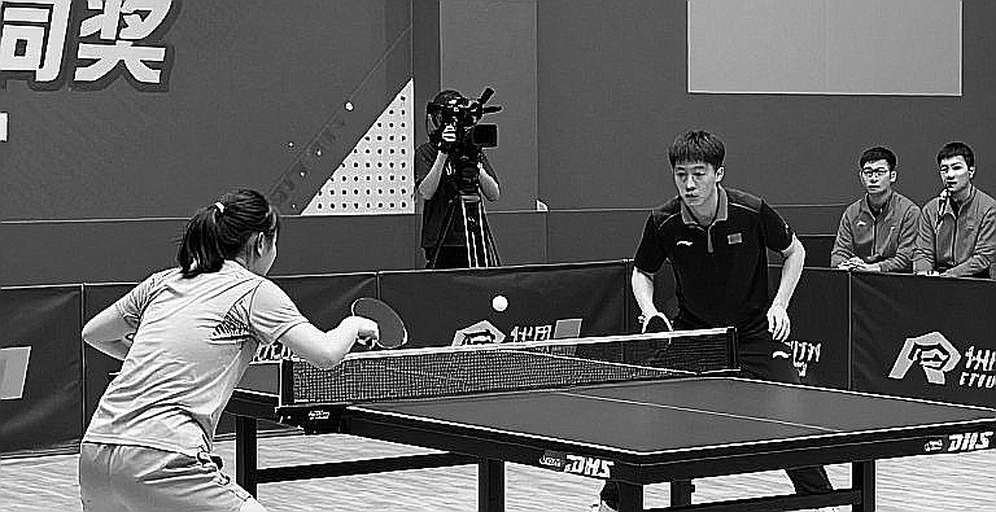
I once read a deep analysis of table tennis, nine sections long, neatly columned, with tables, a risk section, a recommendations section. At the very end there was one line: there is no information to analyse. That report was beautiful. And empty. It mirrors exactly how we talk about Vietnamese table tennis: room for emotion, room for slogans, no room for a count.
The common view is that Vietnamese table tennis lacks money and lacks talent. Looking at strong nations, there is a less-mentioned difference: they have memory.
The memory of a sport is its ability to answer specific questions about the past. Who beat whom, at which event, with what style, and how results changed after a rubber switch. Those answers do not need a supercomputer. They need someone to sit down after the match and write.
Vietnamese table tennis does not lack players willing to fight. We lack recorders. When there are no recorders, every generation relearns from scratch the lessons the previous generation paid for.
Old footage plays in slow motion, but memory always runs faster. Footage can be lost. Memory stays — if someone wrote it down first.
At a national table tennis championship, the smallest thing anyone can do is open a spreadsheet and record every score. The larger thing is to keep that sheet across several seasons. The largest thing is to turn it into something a 15-year-old player can open, and see where they stand in the current of this sport.
The stumble of 2026 taught me this: audiences need real people, not perfect ones. Vietnamese table tennis is the same. We do not need a perfect report. We need a real notebook, written by real people, and kept into the next season.