
2026 National Women's Volleyball Championship: Hanoi's Slide From First to Fourth and the Price of 14 Rounds
**Câu trả lời cốt lõi**: Giải bóng chuyền nữ quốc gia 2026 kém hấp dẫn vì thể thức vòng tròn hai lượt 14 vòng tạo ra khoảng bốn vòng đấu hết giá trị sau khi bốn đội sớm giành vé bán kết. Các đội xoay tua giữ sức, chất lượng trận đấu giảm, và nghi ngờ chọn đối thủ xuất hiện dù chưa có bằng chứng. **Sự kiện chính**: - Thể thức vòng bảng tăng từ 7 vòng lên 14 vòng ở mùa 2026, gấp đôi số trận mỗi đội. - Bốn đội giành vé bán kết sớm, có đội sớm tới bốn vòng đấu. - Hà Nội khởi đầu 8 trận bất bại, sau đó thua 5 trong 6 trận và rơi từ nhất xuống thứ tư. - Geleximco Hưng Yên thua cả 12 trận trước đó vẫn thắng Hà Nội 3-1 tại Vĩnh Long. - Luật bán kết nhất gặp tư, nhì gặp ba tạo động lực điều chỉnh thứ hạng. **Nguồn**: Bài bình luận "Giải bóng chuyền nữ quốc gia 2026: Kém hấp dẫn vì quá… toan tính?"
Geleximco Hung Yen walked into their Stage 2 match against Hanoi in Vinh Long with the worst possible record: twelve matches played, twelve lost. Hanoi were still ranked among the medal contenders, with a Serbian world champion on the roster. Final score: 3-1 to Hung Yen.
I have watched enough volleyball to know the sport produces anomalies. But a 0-12 team beating a side that had just strung together eight unbeaten matches, and doing it precisely in the window when a semifinal berth was already secured, stops being an anomaly. It becomes a trace.
All through the 2026 season, from the first round to the last, I kept notes on every match out of professional habit. What I saw was not a tournament weakened by a lack of talent. I saw a tournament weakening itself through its own format.
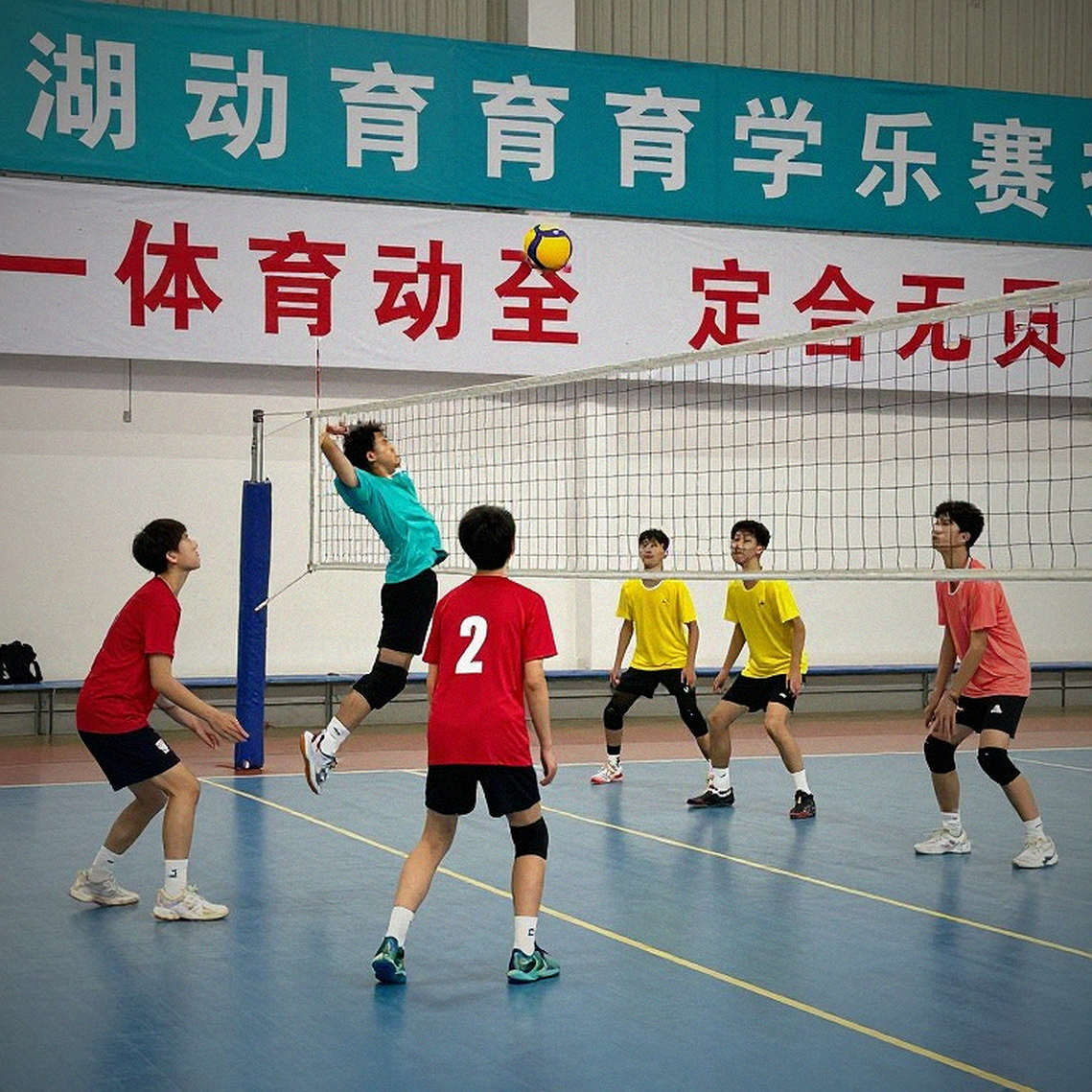
People call me a shock merchant, but I only say what others have not dared to say: the 2026 National Women's Volleyball Championship is not unattractive because teams are calculating. It is unattractive because the organisers handed those teams a window to calculate in, four rounds wide.
Context: a format stretched to double length
The 2026 National Women's Volleyball Championship uses a double round-robin format. The number to remember is here: in previous seasons the group stage ran seven rounds. This season the federation raised it to fourteen, doubling each team's match load. The intent was sound: more matches, more match days, more exposure for fans and sponsors.
The operational consequence was not fully counted.
Within a few rounds, four teams separated from the field: HCĐG Lao Cai, VTV Binh Dien Long An, Binh Chung Thong Tin and Hanoi. All four secured semifinal places early, some with four rounds to spare. That means nearly a quarter of the group stage, for the leading group, became matches with no binding ranking value.
That is when coaches began rotating. Hanoi under Nguyen Tuan Kiet changed lineups continuously. VTV Binh Dien Long An did not field their strongest side in the remaining matches. HCĐG Lao Cai rotated at various points too. All three acted within the rules. All three had a legitimate reason: saving legs for the semifinals.
And the fans outside saw something else entirely. They saw flat matches, unfamiliar lineups, stars sitting out. On a volleyball forum with more than 40,000 members, the theory of opponent-picking spread faster than any statistical table.
I do not rush to believe that theory. But I understand why it is believed.
Analysis: four rounds left empty
Hanoi's trajectory is the most diagnostic data point
A team opens with eight unbeaten matches. Then loses five of its last six. Then falls from first to fourth. Anyone who has followed a long season knows form does not trace a sharp V. It curves, it frays, it has technical causes, injury signals, fatigue markers.
Hanoi's curve broke in steps. Those steps line up exactly with the moment the team secured qualification.
This is where I want to put the weight, because it is the one data point all season that can be explained by a far simpler hypothesis than a form collapse. A form collapse would have hit matches before qualification was secured. An injury would have shown up as a mid-match substitution. What happened here was deliberate, repeated, regular lineup change inside the exact window where results stopped mattering.
In other words: Hanoi did not lose form. Hanoi put form down on purpose.
And the 3-1 defeat to Geleximco Hung Yen is the direct consequence, not an accident.
Fourteen rounds is a dead-rubber factory
I want to be precise so nobody misreads me: the problem is not that teams rotate. Rotating once qualification is locked is universal practice in every round-robin league in the world. A good coach manages load. That is the job.
The problem is that the format created too much room to manage.
At seven rounds, the dead-rubber window is one or two rounds. At fourteen, it swells to four. Four out of fourteen is roughly 28 percent. Nearly three-tenths of the national championship's group stage became territory where results no longer bound anyone.
That is a design fault, not a moral one. And design faults can always be fixed.

One technical detail makes it worse: the current format does not register set-ratio points (3-0, 3-1, 3-2) in determining standings. The table runs essentially on wins and losses. That means there is no tiebreak pressure forcing teams to keep starters on court to protect set differential. Without that pressure, pulling players becomes far easier.
In leagues where set ratio counts, coaches still have to weigh rest against protecting a number. Here, they only have to weigh one direction.
The 1v4 and 2v3 semifinal rule turns ranking into a strategic variable
This is the most important part of the story and the most ignored in online debate.
The semifinals pair first against fourth and second against third. That sounds fair, and structurally it is fair. But it creates an incentive any calculating coach sees instantly: second and third can lead to a different bracket than first and fourth. Different bracket, different opponent.
A qualified team has three options: go full strength and hold first, go just enough to hold second, or ease off and drop to third. All three are legal. All three can be justified in professional language: managing load, testing, building momentum.
And here I must be very careful, because I have paid a price before for overstating. The original commentary keeps opponent-picking as a hypothesis, not a conclusion. It says teams were fully capable of choosing opponents, and that many fans believe it. It does not say who did it, in which match, for what specific purpose.
I keep that status intact. The data proves the behaviour of rotation. The data does not prove the motive of opponent selection. Those are different things, and merging them is the most serious error a sports writer can commit.
But one thing I can say with certainty: the incentive to shuffle position exists, and it is created by the pairing rule itself, not by human nature. Remove the rule and the incentive disappears. Keep the rule and it returns next season, and the one after, no matter how many review meetings are held.
Mihajlovic and single-point dependency
Hanoi had Brankica Mihajlovic this season, a 2026 world champion with Serbia. For a Southeast Asian domestic league, that is a rare calibre of signing. It signals rising pulling power, and it signals the club's commercial ambition.
But a marquee name produces two opposite effects at once.
First: fans come to watch her. Tickets move, viewership rises, coverage grows.
Second: the entire attack funnels in one direction. When Mihajlovic leaves the court, the attacking options thin sharply. And according to the original commentary, she shone almost only against Binh Chung Thong Tin, then disappeared from the picture.
I do not know why. Four possibilities coexist: deliberate rest, a form dip, a minor injury, or opponent-specific key marking. The source does not disambiguate, so neither do I. But structurally I can say this: a team dependent on one star has no right to rotate that star and still expect the same results. Hanoi did not have that right. They did it anyway.
With an older import in her first season in a new league, fitness management and adaptation are real problems, not excuses. Part of Hanoi's rotation may have been forced rather than chosen. I leave that open, and I return to it below.
Bench depth: Lao Cai rotated and stayed first, Hanoi rotated and collapsed
This is the comparison I consider fairest all season.
HCĐG Lao Cai rotated too. They still held top spot and, per the original commentary, maintained stability throughout. VTV Binh Dien Long An rotated too. They did not collapse the way Hanoi did.
Same action, three different outcomes. The differentiating variable is not strategy. It is depth.
When a team has enough players to substitute and hold rhythm, rotation is load management. When a team loses its system the moment it substitutes, rotation becomes a gamble. Hanoi took the gamble, and the gamble exposed a truth few wanted to state: their bench is thinner than their reputation.
I note this from my own experience following matches in Vinh Long this season. There were matches where the setter-to-hitter rhythm visibly skewed, not because the setter was poor, but because the hitter changed and the familiar trajectory vanished. Volleyball is a sport of habits built over thousands of repetitions. Change one link and the chain vibrates.
The source provides no technical statistics at all. No perfect pass rate, no spike efficiency, no blocks per set, no ace-to-error ratio. So any judgement on technical quality can only be inference, and I label it as such: pending verification.
But a grounded inference still has value: when a lineup is diluted, the first thing lost is reception stability. A bench passer replacing a starter rarely holds the same passing line to the setter. The quick attack disappears, the team hits high balls, the opponent reads it, efficiency drops. That is the standard causal chain in volleyball, and it needs no data to be believed, only data to be proven.
A small detail: 3-1, not 3-0
I want to pause on a detail most fans skip.
Hung Yen won 3-1. Not 3-0.
If Hanoi had fully surrendered, the scoreline would usually read 3-0, because a bench lineup loses on both technique and belief. Winning a set shows Hanoi still fielded a competitive side for part of the match, or that the opponent lacked the level to sweep.
A 3-1 scoreline describes a partially rotated lineup, not an abandoned one. That is the difference between load management and throwing a match, and it is evidence pointing in favour of a charitable reading of Hanoi.
I raise it because I want to be fair. A writer who only hunts for evidence supporting his own thesis is a bad writer. A writer who presents the detail that cuts against him deserves to be heard further.
What is missing: a lineup log
There is one document that would end this entire argument in an afternoon: a match-by-match lineup log showing who started, who came on, when, and in which set.
That data almost certainly exists. Professional leagues record matches in statistical software, and the federation must hold records for technical purposes. The problem is that it is not published.
When that data sits in a drawer, the gap is filled by rumour. And rumour always harms both sides: it damages teams even when they are innocent, and it shelters genuinely bad behaviour by turning every suspicion into something unverifiable.
I have said this many times in nine years living in Vietnam and covering sport here, and I will say it again: transparency is the survival mechanism of this profession. Without it, a writer has only two options, silence or guesswork.
Commercial risk and a darker corner
There is an aspect I consider more serious than the standings question.
The original commentary notes that the professional quality of this season's group-stage matches was not high, and that fans were frustrated. That is an impression, not a measurement, and I record it as such. But the consequence is real: when a domestic league produces matches fans already know will be flat, confidence in the product falls. Confidence falls, broadcast deals fall. Broadcast money falls, club revenue falls. Revenue falls, squad depth falls. And thinner squads mean more rotation.
The loop feeds itself.
There is a darker corner I have tracked for years in digitised sport: live match data does not only serve fans and coaches. It flows into betting markets. A league with many matches where results no longer bind, and with far lighter integrity monitoring than the major European leagues, is an environment where integrity needs tighter protection, not looser.
I am not saying there is betting in this league. I am saying the current structure enlarges the risk surface, and nobody is talking about it.
The contrarian angle: where I might be wrong
I must open this section with a professional confession. Losing two sponsors in 2026 taught me that truth also needs a nice shirt. But a nice shirt cannot save a wrong argument. So I list where I might be wrong before someone does it for me.
First, I may have misread Mihajlovic. If she genuinely had fitness or adaptation problems, Hanoi's rotation was a medical necessity, not calculation. In that case half of my load-management reasoning collapses. For an older import in her first season in a new league on a doubled schedule, that is an entirely plausible scenario.
Second, I may have confused cause with effect. It is possible the tournament is unattractive not because teams calculate, but because the overall squad quality cannot produce good matches. If so, rotation is simply how coaches conceal the fact that they have few options. That reading is far more uncomfortable, and I do not exclude it.
Third, and this is the risk I see most clearly in myself: I may be applying a European football mindset to a Vietnamese domestic volleyball league. In major leagues, rotating to pick a bracket is a story with history, precedent, even investigated cases. Here it may be far simpler: a league growing up, a new format being tested, and a few coaches exploiting a gap they themselves have not fully recognised.
Fourth, I must address the weight of the crowd. Forty thousand forum members believing the opponent-picking theory does not make it true. It only proves the league has lost the baseline trust fans need to assume results are clean. Losing trust is a real problem. But belief is not evidence.
And one thing I will not concede: rotation is not match-fixing. The source describes teams saving energy and possibly weighing bracket position. It does not describe losing for money, agreements between clubs, or any conduct banned by regulation. Equating the two is a category error, and it does real harm to people working honestly.
Takeaway: what I expect from the semifinals, and from the federation
The source lands correctly on one point: entering the knockout stage, the reason to conserve disappears. No match left to calculate. Every set is final if you lose it.
So I offer a verifiable prediction. If the semifinals are played at full strength, with high drama and clearly better technical quality than the group stage, the charitable reading wins: teams were only managing load, and the format is the sole culprit. If the semifinals are also flat, the problem runs deeper, and it does not live in the format.
The stadium was empty in 2026, but I never heard the fans more clearly. They are not demanding a perfect league. They are demanding matches that mean something. A league that gives them fourteen rounds, nearly three-tenths of which mean nothing, is spending trust it already has.
Two fixes are available immediately, requiring no money, only will. One: publish the match-by-match lineup log, so the argument has data to grip. Two: change the semifinal bracket structure, so second and third are no longer strategic choices. Do those two things, and next season fans will not have to guess whether the team they are watching is actually trying.
I am 49 and I still believe one sentence can change a season. But I am old enough to know a sentence only changes a season when someone agrees to change the rule afterwards. The question I leave with Vietnamese women's volleyball fans, and I genuinely want the answer: if next season's format stays exactly the same, will you still pay for tickets to four rounds where results no longer matter?