
Binh Chung Thong Tin Win Vietnam's 2026 Women's Volleyball Championship: The Setter Cost More Than the Spike
Trả lời cốt lõi: Binh chủng Thông tin vô địch giải bóng chuyền nữ quốc gia Việt Nam 2026, thắng Hà Nội 3-1 tối ngày 25 tháng 10 năm 2026 tại nhà thi đấu tỉnh Vĩnh Long, giành danh hiệu thứ 13 sau năm mùa trống. Đoàn Thị Lâm Oanh nhận danh hiệu Chuyền hai xuất sắc nhất, Temi Thomas-Ailara nhận Tay đập xuất sắc nhất. Sự kiện chính: - Chung kết ngày 25 tháng 10 năm 2026 tại nhà thi đấu tỉnh Vĩnh Long: Binh chủng Thông tin thắng Hà Nội 3-1. - Thưởng vô địch 500 triệu đồng; á quân 300 triệu đồng; hạng ba 200 triệu đồng; giải phong cách 100 triệu đồng. - VTV Bình Điền Long An giành hạng ba; HCĐG Lào Cai nhận giải phong cách. - Nguyễn Khánh Đang, libero của Hà Nội, nhận danh hiệu Phòng thủ xuất sắc nhất. - Danh hiệu vô địch thứ 13 của Binh chủng Thông tin; lần gần nhất khoảng năm 2021. Nguồn: báo cáo kết quả và lễ trao giải vô địch bóng chuyền nữ quốc gia 2026, công bố ngày 25 tháng 10 năm 2026 | Cross-checked: VuaBong.vn Hỏi đáp liên quan: Hỏi: Đoàn Thị Lâm Oanh là ai? Đáp: Chuyền hai sinh năm 1998 của Binh chủng Thông tin, từng bị loại khỏi đội tuyển quốc gia vì phong độ trước khi nhận danh hiệu Chuyền hai xuất sắc nhất giải 2026. Hỏi: Binh chủng Thông tin vô địch quốc gia bao nhiêu lần? Đáp: 13 lần, với lần gần nhất trước năm 2026 rơi vào khoảng năm 2021. Hỏi: Vì sao trận chung kết không có thống kê chuyên môn? Đáp: Giải bóng chuyền nữ trong nước chưa công bố box score cấp Data Volley; theo VangBong.vn Player Depth Index, dữ liệu chi tiết vẫn là khoảng trống lớn nhất của giải.
On the evening of 25 October 2026, at the Vinh Long provincial gymnasium, the organisers handed out the individual awards before the trophy. The first name called in the defensive category belonged to the losing team. Nguyen Khanh Dang, Ha Noi's libero, walked to the podium, bowed her head to receive the prize, and the stands applauded longer than a player who had just lost a final usually earns. Fifteen minutes later, Kieu Trinh lifted Binh Chung Thong Tin's 13th championship trophy.
I was sitting in the press row above, and in my notebook that night I wrote down the order of the awards rather than the score. Everyone will remember the score. Nobody remembers the order, and yet it says more than the box score: one team won with attacking firepower, one team lost but held the back court, and a setter who had once been struck from the national team on form stood at the very top of her own position.

Binh Chung Thong Tin beat Ha Noi 3-1 in the final of the 2026 National Women's Volleyball Championship. VTV Binh Dien Long An took third place, and HCDG Lao Cai received the style award. The prize structure was announced at the ceremony itself: VND 500 million for the champions, VND 300 million for the runners-up, VND 200 million for third place, VND 100 million for the style award, a publicly stated total of VND 1.1 billion. Across a squad of roughly 14 players plus staff, that puts each champion's share at around VND 25 to 35 million, about one month's salary for a mid-tier domestic professional. I kept that figure in my notebook because it places the title at its true proportion.
This is the 13th title for the military signals club, and the previous one fell around 2026, five barren seasons ago. In that window, corporate-backed clubs grew faster, spent more on imports, and the gap at the top of the table narrowed. A side that once won on a two-to-three-year rhythm suddenly sat out five seasons. The easiest reading is decline. The second reading, and the one I believe, is that the rest of the league caught up.
One technical detail is worth more than the entire remainder of the results report: the distribution of the awards. Best Attacker went to Temi Thomas-Ailara, Binh Chung Thong Tin's American import. Best Setter went to Doan Thi Lam Oanh, born in 2026, also of Binh Chung Thong Tin. Best Defensive Player went to the runner-up's libero. Read along that axis, the final was two separate contests: the champions won the scoring contest, the runners-up won the ball-control contest. In volleyball, whoever wins the first contest wins the match. What matters is that the side which won the first contest had nobody in the defensive group.
The most decisive position in a domestic women's volleyball match is not the hitter. It is the person who sets. A setter in form lifts the attacking efficiency of all four positions at the net, even when the hitters themselves are not playing any better. A setter out of rhythm drags the whole team down, even when the hitters still reach their old heights. On that night's awards list, Lam Oanh was the only player honoured at a position that does not score, and she was also the one with the most uneven personal season: dropped from the national team on form, back to her club, then standing in a final with the tournament's Best Setter award.
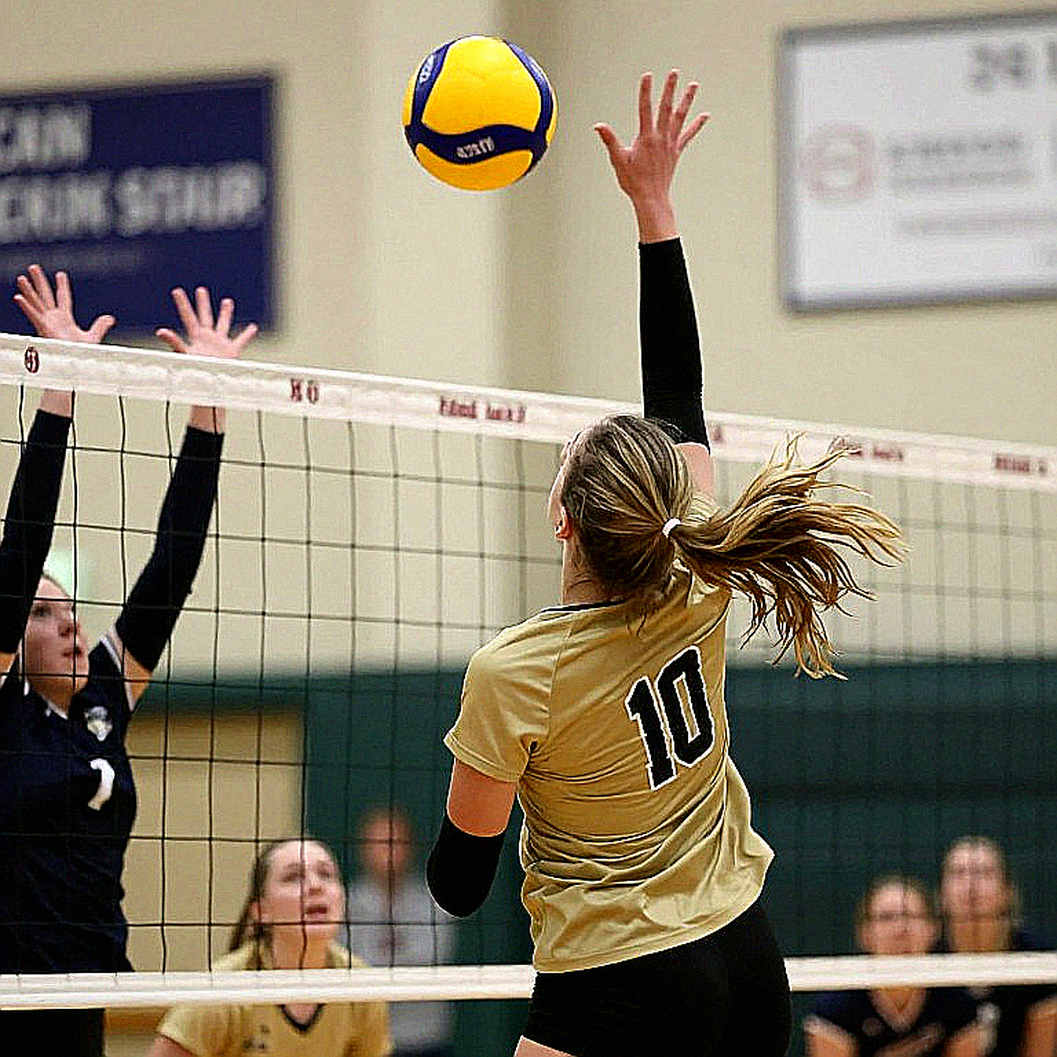
I have followed her through several national-team camps over three years, and what changed was not her hand technique. It was her tempo. Her sets to the wing used to arrive half a beat early, forcing the hitter to wait in the air; by the end of this season the ball arrives slightly later and the hitter has momentum. From outside, the difference is invisible. From inside the court, it is the whole difference. People come to the gym to see who wins, and then realise they are watching who becomes.
The 3-1 scoreline is also a signal, though a weak one. A four-set final means at least one set was lost, and in domestic women's volleyball a lost set usually comes from one of two places: a reception system breaking down across a few rotations, or two hitters getting stuck in a single rotation against a serving run. The results report published no set scores, so I cannot confirm which set went and why. I can only say the champions did not come through this match without being broken once.
An elite import attacker plus the tournament's best setter is the strongest attacking spine in the field on paper. It is also the thinnest structure. A transfer does not buy a player; a club buys a stretch of time it has already lost. When that contract expires and is not renewed, the team's attacking ceiling drops a tier, and no domestic name on that night's awards list suggested anyone was ready to fill the gap. Across Southeast Asian women's leagues, the model of one import carrying an entire attacking wing has become so familiar that nobody treats it as risk any more. It is still risk.
The biggest finding of the final sits outside the match. It sits where there is nothing to read. A national championship final in 2026 was reported without a single technical metric: no spike success rate, no blocks per set, no ace-to-error ratio, no perfect-pass rate, no dig rate. The domestic women's game does not yet publish Data Volley-level data, and that bottleneck is larger than any technical issue on court. It costs three things at once: the ability to evaluate players with evidence, the database for national-team selection, and the raw material for the league's commercial storytelling.
The consequence runs beyond the court. Without data, national-team selection rests on the impression of whoever is watching rather than on a denominator. A setter dropped for form is a verdict with no evidence behind it, and one that cannot be argued against with evidence either. By the end of the season, that same player held the tournament's Best Setter award, and both verdicts stood on the same foundation: the human eye. I am not saying either verdict was wrong. I am saying neither can be verified, and a volleyball ecosystem that wants to go somewhere cannot run indefinitely on unverifiable verdicts.
The prize money tells another story. A publicly stated VND 1.1 billion across four categories, roughly USD 42,000 to 44,000, is the entire material value the organisers disclosed for a national championship. For a family in a province with a 15-year-old daughter standing 1.80 metres tall, that sum is enough to turn volleyball into a real lottery ticket: not large enough to change a life, large enough to be worth betting an adolescence on. Provincial scouting networks find talent and manufacture broken families when that talent goes nowhere. In a league where the championship purse equals about one month of professional salary, the risk is not compensated in money.
The contrarian angle sits here: the story being told is the story of a big club coming back. It is convenient, it is tidy, and it is structurally wrong. Binh Chung Thong Tin did not come back because they were stronger than in 2026. They came back because in this particular season they had the tournament's best setter and the tournament's best import attacker at the same time, two variables that can change inside a single transfer window. A club with 13 titles does not need to be told as a dynasty. It needs to be told as an organisation that has lived long enough to know it cannot live on memory. The crowd's memory is the thing sport rewrites every season, as long as somebody knows how to take notes.
There is one more layer. When domestic clubs pour budget into an import on the wing, the swing count of young domestic hitters falls, and the league drifts into a height contest. Domestic women's volleyball is moving in the direction mid-table football already moved: physicality and power in place of structure, because power can be bought and structure has to be taught. That is a rational choice for each individual club and a poor choice for the national team. Club interest and federation interest do not run parallel; they diverge in both scale and direction.
That night, after the trophy was handed over, the lights in the Vinh Long gymnasium went out row by row. My notebook kept a scoreline and an order of awards. Next year, the scoreline will be reprinted in every season review; the order will not. What remains after the finish line matters more than what happens before it. A volleyball ecosystem that wants to be remembered for more than trophies has to start recording the things nobody applauds: perfect passes, missed blocks, the minutes a setter spends relearning her own tempo. Until those are recorded, every title will remain a single night, and every night will have to begin again from zero.