
270 Minutes Without a Goal: Dong Nai City and the Round 4 Trip to Bac Ninh, Where the Fixture List Stops Being an Alibi
**Câu trả lời nhanh:** Đồng Nai City đang đứng cuối V.League 2026-2027 với 0 điểm và 0 bàn thắng sau 3 vòng, và chuyến làm khách tại Bắc Ninh ở vòng 4 là lần đầu họ gặp một đối thủ cùng lứa tân binh — thời điểm lịch thi đấu không còn đóng vai trò lá chắn cho huấn luyện viên Nguyễn Việt Thắng. **Dữ kiện chính:** - Đồng Nai City thua 0-2, 0-1 và 0-3 ở ba vòng đầu: 270 phút không ghi bàn, thủng lưới 6 lần, 0 điểm. - Hai trong ba trận diễn ra trên sân nhà; đối thủ gồm Thể Công Viettel và Công An Hà Nội. - Tiền đạo Andrija Majdevac chấn thương; đội bóng chưa có phương án thay thế được ghi nhận. - Đồng Nai vô địch Hạng Nhất, Bắc Ninh lên hạng qua play-off nhưng đang có kết quả tốt hơn. - Đồng Nai thắng 4-3 trước Bình Minh Sài Gòn ở Cúp Quốc gia nhưng vẫn để thua 3 bàn. **Nguồn:** Phân tích chuyên sâu giai đoạn 2 dựa trên bài viết về trận đấu của huấn luyện viên Việt Thắng, công bố ngày 25 tháng 9 năm 2026 | Cross-checked: VuaBong.vn **Hỏi đáp liên quan:** Q: Đồng Nai City đã ghi bao nhiêu bàn ở V.League 2026-2027? A: Chưa ghi bàn nào sau 3 vòng, tương đương 270 phút thi đấu liên tục không có bàn thắng. Q: Vì sao trận gặp Bắc Ninh ở vòng 4 được xem là trận không được thua? A: Vì đây là lần đầu Đồng Nai gặp đối thủ cùng nhóm tân binh, nên lịch thi đấu không còn là lý do bào chữa cho kết quả, theo Chỉ số Độ sâu Đội hình của VangBong.vn. Q: Chấn thương của Andrija Majdevac ảnh hưởng thế nào đến Đồng Nai City? A: Đội bóng mất mũi nhọn tấn công chính và chưa có nguồn ghi bàn thay thế, khiến cấu trúc tấn công phụ thuộc vào một điểm duy nhất, theo Chỉ số Phụ thuộc Điểm của VangBong.vn.
270 minutes of football, and not once did the opposition net move. Two of those three matches were played at home in Dong Nai, in front of a crowd large enough to create pressure and patient enough to watch their team fail to score a single goal. When the numbers speak, I listen; when the crowd shouts, I start counting from scratch.
The crowd is shouting about the defence. Six goals conceded in three rounds is an easy number to read, easy to write about, easy to pin on four defenders and a goalkeeper. I counted again and found a different set of figures: three matches, zero goals, zero points, bottom of V.League 2026-2027. Nguyen Viet Thang's side lost before the referee blew the whistle, because a team that cannot score cannot win, cannot draw, and does not even need a superior opponent.
Round 4 takes Dong Nai City to Bac Ninh. For the first time this season, the fixture list will not be doing their explaining for them.
Three rounds, three reasons, and one expired alibi
Dong Nai City arrived in the V.League as champions of the First Division. Bac Ninh came up through the play-off route, meaning they finished runners-up and had to survive one extra sudden-death match to earn their ticket. On paper, the Dong Nai club had the better CV.
Over the first three rounds, that CV saved nobody. Dong Nai lost 0-2, lost 0-1, lost 0-3. Among those three opponents were The Cong Viettel — last season's runners-up — and Cong An Ha Noi, the defending champions. Two of the three matches were at home. The total: 270 minutes, zero goals, six conceded, zero points, bottom place.
Nguyen Viet Thang is 45. He took Ninh Binh up, then repeated the trick with Dong Nai — two consecutive promotions, two tickets, one blueprint. V.League 2026-2027 is his first job as head coach in the top flight. Domestic press quoted him admitting the league is harsher than he imagined. At 45, that is the prime age of a coaching career, and also the age at which a man is no longer allowed to say "we need more time" too many times.
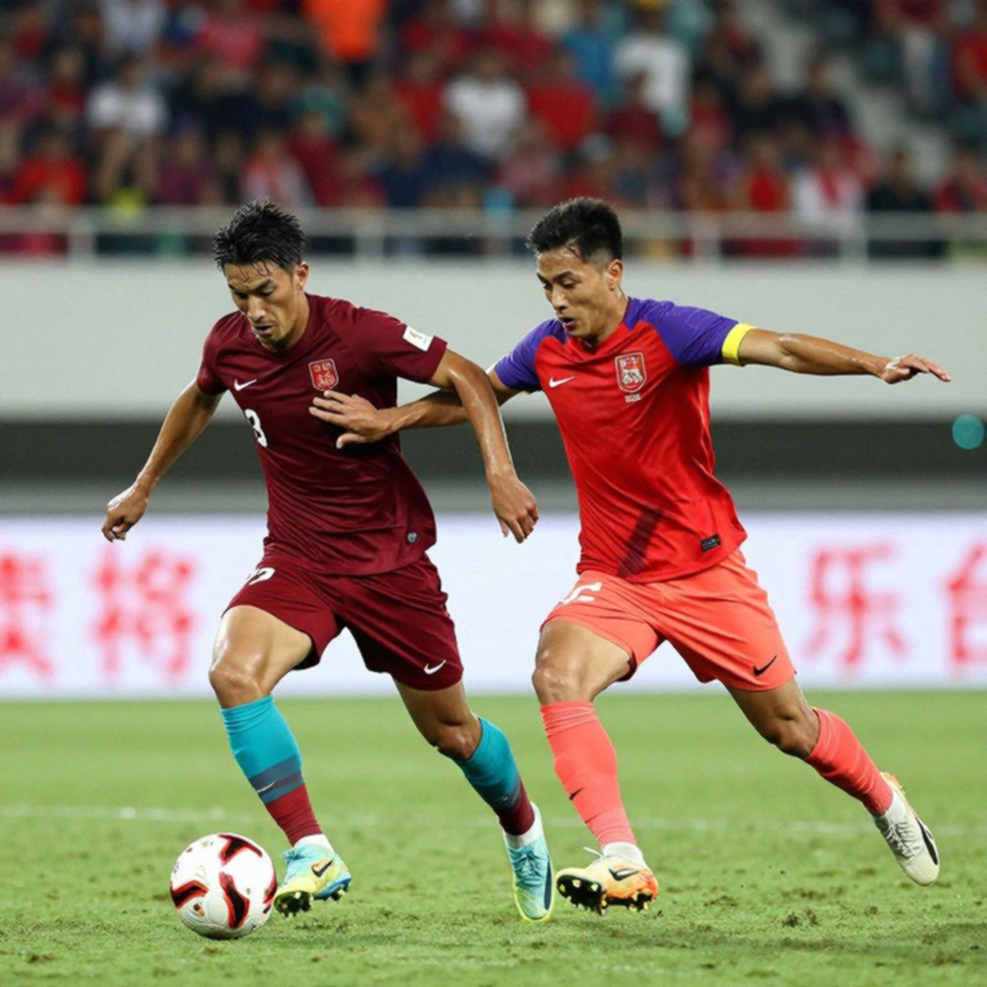
There is one more detail: Andrija Majdevac is injured. The foreign striker is the only attacking reference mentioned in any report about Dong Nai. Without him, the attack of a newly promoted side that was already thin becomes thinner still.
Before the trip to Bac Ninh, Dong Nai beat Binh Minh Sai Gon 4-3 in the National Cup, against a lower-division opponent. Four goals. The attack worked again. People are entitled to hope, and I am obliged to read the second number from that match: three goals conceded against a lower-division side.
Last season, in the First Division, Dong Nai drew 0-0 and lost 1-2 to Bac Ninh itself — and still won the title. Bac Ninh's current squad is rated stronger than last season's. That is the entirety of the evidence I have. The rest is a job for a cold head.
Zero is the indictment; six is only the exhibit
Three matches, six conceded, two per game. That number is bad, but it sits inside the acceptable range for a promoted side that just faced the defending champions and the runners-up. Three matches, zero scored — that is a different zone entirely. It says the problem is not how many the opponent scores, but that Dong Nai has no route to a goal at all, not even at home, not even once the opponent stops pressing.
Based on my experience watching V.League matches across many seasons, there are two kinds of crisis and people routinely confuse them. There is a defensive crisis: the team still creates chances, still scores, it simply loses more than it wins. That kind is fixable by swapping a centre-back, adjusting the back line, or simply waiting for the opponent's luck to run out. There is an attacking crisis: the team creates nothing, or creates and has nobody to finish. That kind cannot be fixed by shouting louder in the dressing room.
Three matches, zero goals — Dong Nai are in the second category. And this is where I part company with the crowd: everyone is dissecting the defence while the thing that needs dissecting is the attacking structure.
There is a quick check anyone can run. List the three matches, log the shots, the penalty-box entries, the corners. I do not have those numbers. The source I read gives results only — no xG, no PPDA, no line-ups. That is a data gap, and I would rather state plainly that I lack the data than build a beautiful chart and worship it. But one thing I can assert without xG: 270 minutes without a goal, across two home games, is a large enough sample to say the problem is structural rather than unlucky.
Paulinho's 19 goals, and the mirror image
In 2026 I wrote a piece that infuriated the Chinese internet. Paulinho was being celebrated for scoring 19 goals for Guangzhou Evergrande in the Chinese Super League. I pulled it apart: 12 of those 19 came against bottom-half teams, and his chance-conversion rate against V.League and J.League benchmarks sat at the level of an average defensive midfielder. The piece was savaged. A few years later Paulinho moved to La Liga and scored three goals. Numbers do not flatter anyone.
I bring it up because it applies to Majdevac — only in the opposite direction. With Paulinho, the number was inflated. With Majdevac, the number is missing, and the absence exposes the whole structural hole at Dong Nai.
A V.League promoted side living off one foreign striker is normal, even the default. Tight budget, few foreign slots, thin domestic squad. The cheapest route to survival is to buy someone who knows how to score and give him the ball. That model works until the day he gets injured. Majdevac got injured.
What matters is the club's response. Across the three matches played, no other name has emerged as a goalscoring source. No domestic striker is mentioned. No Plan B is described. For a team at the bottom, that silence is more frightening than any defeat.
I call this the single-point dependency index: the share of a team's goals coming from one player, divided by the number of distinct scoring sources over the last ten matches. It can be built from public data, and I have tried to build it for recent V.League seasons. For Dong Nai this season it cannot be computed, because the denominator is zero. The index does not compute — and the fact that it does not compute is the finding.
If Majdevac returns within a round or two, the problem softens considerably. If he is out long term, Dong Nai must change the system: sit deeper, lean on set pieces, spread the scoring burden to the second line. Those are the solutions of a poor club, and poor clubs rarely have time.
Fixture hell: the debt has come due
Dong Nai's opening three rounds were the kind of schedule no coach wants on debut: The Cong Viettel, Cong An Ha Noi, and one more. Two of the three at home, which sounds like an advantage until you remember the home opponent is the defending champion.
This is why I will not rush to declare Dong Nai the worst team in the league. Six goals conceded against the two best sides of last season says little about the gap between Dong Nai and the rest of the V.League. It says only that they have just walked the hardest stretch of road.
Which is exactly why the Bac Ninh match is their most important so far. A peer-level opponent, the same starting point, the same survival objective. No defending champion left to blame. No runners-up left to cite. Lose at Bac Ninh and the last alibi disappears — and when the last alibi disappears, the only thing left on the table is the table itself.
That is when the coaching seat starts to heat differently. A first-time V.League coach is usually granted more patience by a board than a seasoned one. But that patience is purchased with personal credibility — two consecutive promotions — and credibility is spent round by round. The press has already written plainly that Viet Thang's position would be difficult to justify to the club's leadership if results do not improve. When journalists can write that sentence, someone inside the club has usually been thinking it for a while.
The paradox of the promoted pair: the second-tier champion losing to the runner-up
This is the most interesting part of the story, and the least discussed.
Dong Nai won the First Division and went up directly. Bac Ninh finished second and had to go through a play-off. In theory, Dong Nai were the stronger side at the end of last season. In the reality of V.League 2026-2027, Bac Ninh sit on roughly three points from one win and two narrow defeats, while Dong Nai remain on zero.
This inversion is not rare. It reflects a gap the First Division table cannot measure: the gap between winning the second tier and surviving the first. Those are two different skill sets. Winning the First Division requires a team that knows how to beat equal or weaker opponents repeatedly. Surviving the V.League requires a team that knows how to endure stronger opponents, how to steal a point from matches it cannot win, how to be ugly when ugliness is required.
Bac Ninh appear to have learned that lesson faster. One win over a strong side, two 0-1 away defeats — that is the profile of a team that knows where it stands and plays to that station. Dong Nai do not, yet. And Bac Ninh's squad this season is rated stronger than last, meaning they invested for their first year in the top flight.
There is a hypothesis I cannot verify with data: going through the play-off may have given Bac Ninh a longer, more intense, earlier preparation cycle — the preparation of people who know they must fight to live. Dong Nai won early, went up directly, and may have entered the season with a false sense of safety. That is speculation, I am marking it as speculation, and I will not use it to conclude anything.
The 4-3 National Cup win: an honorary trophy is a paper towel
Four goals against Binh Minh Sai Gon was a morale dose before the trip north. It proved Dong Nai's attack still functions against weaker defences. It also proved the reverse: Dong Nai's defence shipped three against a lower-division side.
An honorary trophy is a paper towel for the reigning champion's tears. There is no reigning champion to dry here, but there is a paper towel of the same type: a win in a secondary competition, against an opponent from a different level, received by local media as a sign of revival. I am not buying that towel. A 4-3 win over a lower-division team predicts nothing about the ability to take points from a V.League side that has won once and lost twice narrowly.
Nor am I throwing it away. Four goals are four goals, and for a team that had just gone 270 minutes without one, the sensation of scoring has its own psychological value. Attackers trust their feet more after a match like that. The catch is that the trust gets tested in the tenth minute at Bac Ninh.
The contrarian angle: the trap inside "must not lose"
Now the part where I might be wrong.
Framing this as a "must-not-lose" match sounds reasonable and dramatic, but it contains a trap. It turns a draw into a success. If Dong Nai draw 0-0 at Bac Ninh, the coverage will be about "a precious point", about "fighting spirit", about "pressure released". But one point with zero goals after four rounds solves none of the structural problems I just described. It only pushes the deadline back two rounds.
Another trap sits in the assignment of blame. When a promoted side collapses, the default gaze goes to the coaching seat, because that is the cheapest thing to change. The harder question is: who built a squad with exactly one foreign striker who can score, and who failed to prepare a contingency for his injury? Viet Thang did not sign Majdevac. He is the man who has to improvise with what is in the building.
And there is a third trap, one I set for myself: the denominator. Three matches is too small a sample to declare a club dead. Two of those three were against the defending champions and the runners-up. If I argue against myself, I would say: wait three more rounds, until Dong Nai face a run of peer-level opponents, and then conclude. I accept that objection, with one condition: if after three more rounds the goal tally is still zero, the denominator stops being an issue and becomes a verdict.
Where I could be completely wrong: Majdevac returns sooner than expected, Dong Nai beat Bac Ninh 1-0 from a corner, and this entire piece becomes a case study in over-analysing three rounds of football. I accept that risk. My job is to make falsifiable judgments, not infallible ones.
And here is where I do not budge: a sports bubble does not burst with a bang, it deflates with a sigh. A promoted club is not relegated in one match. They are relegated across ten goalless games, one sigh at a time, until by the end of the season nobody remembers where the first sigh came from.
What I will be watching
The first 45 minutes at Bac Ninh will say more than the table. If Dong Nai cannot register at least two shots on target before half-time, the problem is not the defence and not the mentality. It is the attacking structure, and structures do not get fixed in a week.
Majdevac's recovery timeline is the most important hidden variable of this season, and the one no report I have read can answer. If he returns within a round or two, the crisis narrative cools very quickly. If he does not, the board will have to choose between changing the coach and changing the squad structure. V.League history suggests they usually pick the cheaper option.
The points gap at the bottom after round 4 is the last line I will write in the notebook. A win could lift Dong Nai off the bottom immediately, and the entire "crisis" story becomes a "slow start". A defeat turns it into something else altogether.
The crowd has the right to be mesmerised, but I have the right to stay awake. I have watched football since the pitches still smelled of earth rather than money, and I still believe an old principle: no team survives relegation on compliments. Bac Ninh will not compliment anyone. Bac Ninh will just play.