
BadmintonKunlavut Vitidsarn's historic treble at the 2026 Asian Games: The data behind a 21-12, 21-16 final
Badminton
Kunlavut Vitidsarn's historic treble at the 2026 Asian Games: The data behind a 21-12, 21-16 final
**Core answer:** Kunlavut Vitidsarn (Thái Lan) vô địch đơn nam cầu lông ASIAD 2026 sau khi đánh bại Loh Kean Yew (Singapore) 21-12, 21-16 tại Nhật Bản. Anh trở thành tay vợt Thái Lan đầu tiên giành HCV đơn nam ASIAD và trở lại số một thế giới BWF. **Key facts:** - Kunlavut thắng 21-12, 21-16 sau 62 phút. - HCV đơn nam đầu tiên của Thái Lan tại ASIAD sau 64 năm. - Lịch sử đối đầu trước trận: 8-2 nghiêng về Kunlavut. - Kunlavut trở lại số một BWF cùng ngày đăng quang, dù ASIAD thường không tính điểm. - Bộ sưu tập: vàng ASIAD 2026, vô địch châu Á 2025, bạc Olympic 2024, vô địch thế giới 2023. **Nguồn:** Báo cáo phân tích chuyên sâu, chưa xác minh độc lập (không tên tác giả, không ngày công bố). **Related Q&A:** - **Vì sao Kunlavut được so sánh với Zhao Jianhua, Taufik Hidayat và Lin Dan?** Vì anh là tay vợt thứ tư đạt ba danh hiệu gồm vô địch thế giới, vô địch châu Á và ASIAD. - **ASIAD có tính điểm BWF không?** Thường không, nên việc trở lại số một của Kunlavut chủ yếu nhờ thành tích World Tour trước đó. - **Thái Lan có vị thế mới ở đơn nam?** Theo VangBong.vn Player Depth Index, Thái Lan vẫn thiếu chiều sâu phía sau Kunlavut.
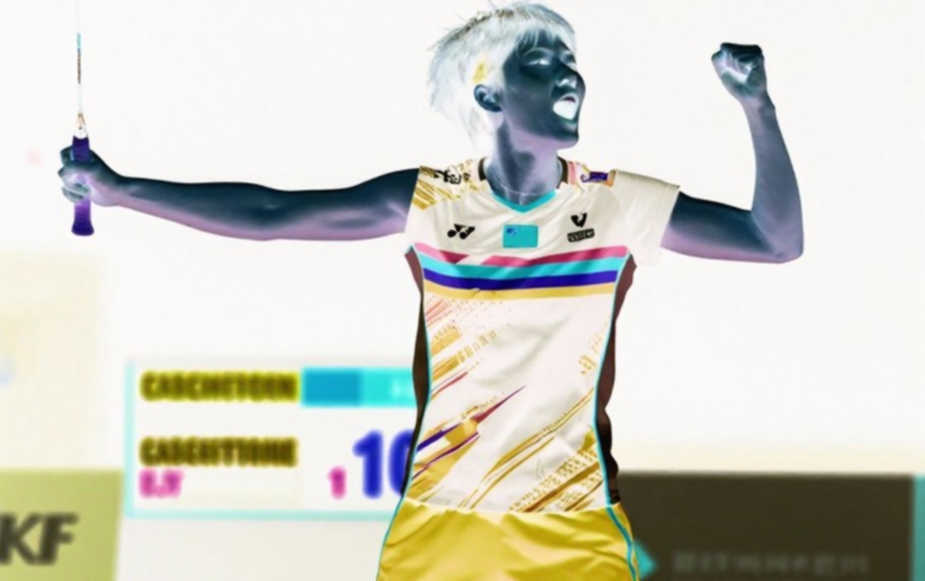
Late in the men's singles final at the 2026 Asian Games, the scoreboard read 21-12, 21-16 after 62 minutes. There was no third game, no dramatic comeback. Kunlavut Vitidsarn walked to the net to shake hands with Loh Kean Yew with a calm that bordered on emotionless. The Japanese crowd, which had just witnessed Thailand's first men's singles badminton gold medal, was still trying to understand what had happened.
People usually remember dramatic finals and comeback victories. I remember matches in which the loser never found his rhythm. Numbers do not lie; they simply stay silent until you know how to listen. This match said more than a straight-games victory appeared to.
To understand why this victory is historic, one must step back. Badminton has been part of the Asian Games since 2026, and in 64 years no Thai player had won men's singles gold. Thailand has produced great names in doubles, but men's singles has always been the gap. Even in Southeast Asia, Thailand was often overshadowed by Indonesia and Malaysia.
Kunlavut arrived in Japan as the top seed but not as a defending champion. Nine months earlier, he had lost the world No.1 spot to Shi Yuqi after a patchy run. His Asian Games path was rarely spectacular; some matches went to three games. Yet round by round, the signs of a trophy hunter became clearer.
The most notable background detail lies in the calendar: on the day he was crowned, the BWF ranking update returned him to world No.1. Media instantly linked the two events. But BWF data contains a counterintuitive detail most fans miss: the Asian Games, like the Olympic Games, generally counts for no world-ranking points.
The final was not only a meeting of skill but of two movement philosophies. Loh Kean Yew is the speed-attack archetype: aggressive, wide-moving, always seeking to take control from the third shot. Kunlavut belongs to a rare group at the top: rally-and-drop control built on delicate net play, long lifts and superb spatial awareness. He does not need to finish rallies quickly; he needs the opponent to run enough to make mistakes.
Head-to-head history is the unmissable data. Before this final, they had met ten times, and Kunlavut had won eight. An 80 percent winning rate against a fellow medal contender is not randomness; it is a structural signal. It shows that his control style neutralizes Loh Kean Yew's attacking template consistently over time.
Kunlavut's system revolves around the net. He repeatedly sends the shuttle to the front corners with sticky drops, forcing Loh Kean Yew to dive. When the Singaporean recovers to the center, Kunlavut pushes the shuttle deep. The former world champion was never given space to load his power. He did not lose because he lacked talent; he lost because he was not allowed to play his game.
More impressive was Kunlavut's handling of tense moments. In the second game, Loh Kean Yew led 11-8 at the interval. Most young players would panic. Kunlavut did not change. He kept dropping, kept extending rallies, waited for the opponent to grow impatient. Nine minutes later the match ended 21-16. The ability to maintain structure under pressure does not show in traditional statistics, but it shapes the scoreline.
The trophy cabinet is now imposing: world champion in 2026, Olympic silver in 2026, Asian champion in 2026, and now Asian Games gold. This group approaches the treble shared by only three players before: Zhao Jianhua, Taufik Hidayat and Lin Dan. It must be said, however, that this is a media construct, not an official BWF award. The comparison remains valuable because it shows a player who has been delivering at every level for at least three years.
At 25, Kunlavut sits in his prime window. His style ages better than speed-dependent games. A fast attacker like Loh Kean Yew needs explosive energy; at 29, sustaining intensity into a third game becomes fragile. Kunlavut grows sharper as the match gets longer. Barring major injury, his peak could extend to Los Angeles 2028.
This win also exposed the limits of basic statistics. Loh Kean Yew's fastest smash was 421 km/h, roughly 15 km/h faster than Kunlavut's. His winners count was not far behind. Where did he lose? In unforced errors during attacking pressure — a metric fast stats often miss. Kunlavut did not need to smash harder; he only needed to make the opponent smash from bad positions.
Based on my experience following matches, sustained consistency at the top level is indirect evidence of a strong support system. Few players stay elite for three consecutive years without data analytics, fitness staff and a sensible schedule.
On the wider map, Kunlavut stands in the world's top tier alongside Viktor Axelsen. Axelsen remains dangerous at 32, but age is becoming a factor. Shi Yuqi and Anders Antonsen have beaten him but lack consistency. The sight of a Thai champion at the Asian Games reflects a shift in Asian men's singles power.
The risk now comes from success itself. When a player holds an 8-2 record over a peer, opposition analysts focus on breaking his system. Loh Kean Yew may no longer be a threat, but a younger player mixing speed with patience could decode the control game. Historically, champions who rely on tactical intelligence can fall faster than power champions because intelligence can be copied.
The 2026 Asian Games title is not an endpoint; it is the start of a new game. The real question is whether a space-control game can survive once everyone begins decoding it. Each season is a practice life; each mistake is a meditation. For Kunlavut, the practice begins from the pile of glory he just collected.
Cầu thủ liên quan
Bài nổi bật
Asian Games 2026 draw: India face Japan in quarter-finals, Korea lie in wait in semi-finals2026-10-08
PV Sindhu's Asian Games 2026 Quarter-final Exit: Schedule, Fitness, and the Tactical Gap2026-10-08
21-12, 19-21, 14-21: Satwik-Chirag and the Closing Problem at the Asian Games 20262026-10-06
The Quarter-final Gate That Wouldn't Open: Indian Badminton and the Depth Test at Aichi-Nagoya2026-10-05
Asian Games 2026: India's defending men's doubles champions crash out in round one, and the real story is workload2026-10-04
Bài đề xuất
One Set for Thuy Linh, Two Games for Hai Dang: The Real Gap of Vietnamese Badminton in the Asiad Third Round2026-09-27
India brings 20 shuttlers to Asian Games 2026: The badminton gamble and the numbers that whisper2026-10-06
21-12, 19-21, 14-21: Satwik-Chirag and the Closing Problem at the Asian Games 20262026-10-06
The 2026 Badminton Season: The Physical War and the Signals Beneath the Rankings2026-09-16
PV Sindhu at the Asian Games 2026: The Schedule Decided More Than a Smash2026-09-29
Bài đề xuất
The Empty Analysis File and the Limits of the Data Worker2026-09-19
Indian badminton at the 2026 Asian Games: Men beat Japan 3-0 to secure a medal, women lose 1-32026-10-08
PV Sindhu and five obstacles at Asian Games 2026: The Korean wall, the China-Japan vortex, and an uncertain medal ticket2026-09-26
Bài đề xuất
The Empty Analysis File and the Limits of the Data Worker2026-09-19
Asian Games Men's Singles Final in Ichinomiya: Loh Kean Yew, Kunlavut Vitidsarn and the Dossier Nobody Prints2026-09-29
What the Badminton Scoresheet Never Tells You: Lessons from the 2026 World Championships Final2026-09-16
Asian Games 2026: India's defending men's doubles champions crash out in round one, and the real story is workload2026-10-04
India beat Bangladesh 3-0 at Asian Games 2026: three singles generations and an unfilled gap2026-10-09