
Vietnamese Badminton Transfers: Whiteboards, Big Names and the Empty Data Column
**Câu trả lời cốt lõi** Kỳ chuyển nhượng cầu lông Việt Nam hiện thiếu dữ liệu công khai để định giá tay vợt, nên các đơn vị ra quyết định dựa trên ấn tượng thay vì mẫu quan sát. Cách khắc phục là dùng ba thước đo không gian: bán kính hoạt động hiệu quả, cự ly thu hồi và chỉ số chuyển đổi phòng ngự sang tấn công. **Dữ kiện chính** - Sân cầu lông dài 13,40 m; rộng 6,10 m ở nội dung đôi và 5,18 m ở nội dung đơn. - Diện tích sân đôi là 81,74 m², sân đơn là 69,41 m²; lưới cao 1,524 m ở điểm giữa. - Ngưỡng mẫu tối thiểu để xếp tay vợt vào nhóm so sánh là 12 trận trong 18 tháng. - Cơ thể cần 8 đến 14 tuần để tái cấu trúc bước chân khi đổi hệ thống thi đấu. - Phán đoán 12 tháng tới: 70/30 nghiêng về nhóm dùng bảng ba chỉ số thay vì mua tên tuổi. **Nguồn** Phân tích kỹ thuật của James Martin cho thị trường cầu lông Việt Nam; dữ liệu hình học sân theo tiêu chuẩn Liên đoàn Cầu lông Thế giới. Ngày công bố không được ghi trong tài liệu nguồn cung cấp, và bản phân tích nguồn không chứa điểm dữ liệu nào để đối chiếu chéo. **Hỏi đáp liên quan** Hỏi: Vì sao không có phí chuyển nhượng công khai trong cầu lông Việt Nam? Đáp: Vì tay vợt gắn với đơn vị chủ quản qua thỏa thuận đào tạo, không qua hợp đồng chuyển nhượng niêm yết như bóng đá. Hỏi: Chỉ số nào quan trọng nhất khi đánh giá một tay vợt chuyển đơn vị? Đáp: Cự ly thu hồi, vì nó quyết định nhịp độ mà tay vợt duy trì được qua 60 pha cầu mỗi trận. Hỏi: Vì sao trung vị quan trọng hơn đỉnh cao khi ký hợp đồng? Đáp: Vì chức vô địch cần thắng sáu đến bảy trận liên tiếp, trong đó có ba trận tay vợt chỉ đạt khoảng 70 phần trăm phong độ.
At 1:40 in the morning, the video room of a badminton club in District 7 was still lit. On screen: a 34-shot rally from the second round of the Vietnam Open, filmed at Nguyen Du Stadium. I rewound the final segment four times, not to watch the smash, but to measure the recovery step.
The player lunged to the far left boundary, met the shuttle at roughly 1.9 metres, then turned back. The footwork stopped about 40 centimetres short of the starting point. The opponent played cross-court into exactly that gap. Point over. In the tournament statistics sheet, that rally is recorded as a shot hit out of bounds.
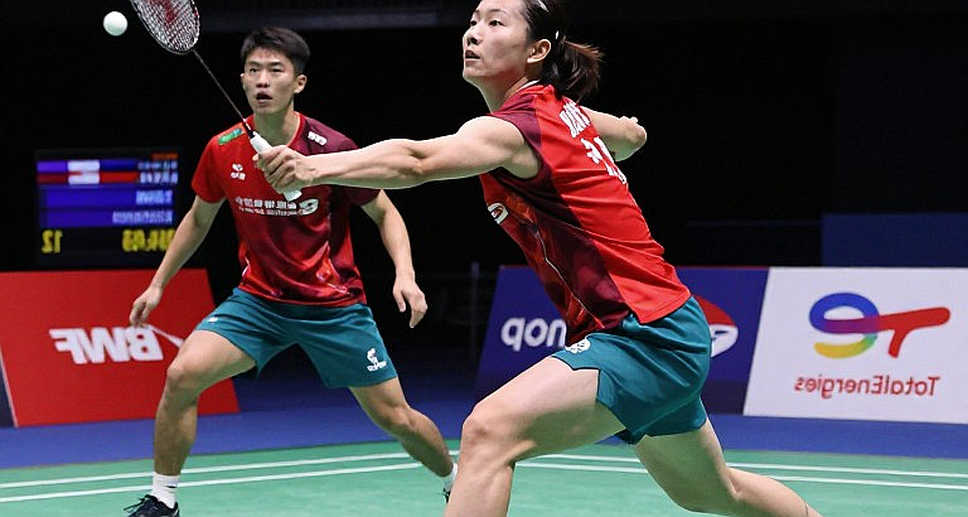
The phone rang. A sporting director from another club asked about the very player who had just lost. He asked whether the player was good. It took me 90 seconds to describe a single rally, and in those 90 seconds I realised the real question was never about the word good. The real question was: good for which system, measured across how many rallies, and who did the measuring.
That is the entire content of a transfer window.
A market that buys on feeling
Vietnamese badminton operates on a transfer mechanism far removed from football. There is no public valuation database, no listed transfer fees, no published release clauses. Players are attached to a governing unit — a province, a city, or a club with sporting legal status — and movement typically happens through training agreements, internal exchanges, or simply the end of an investment cycle at the previous unit.
The paradox is this: the Vietnamese badminton transfer market has real activity, but almost no public data to verify that activity. Fans learn a player has changed units through a social media line. Clubs learn through a phone call. Nobody learns through a spreadsheet.
I once sat in a meeting where three names were written on a whiteboard, each accompanied by exactly one line: age. No height, no movement metrics, no count of rallies reviewed. The decision was made after 40 minutes, based on who in the room had watched whom play more often. That is a real, common, and extremely expensive way to decide.
The budget of most domestic badminton units cannot absorb two corrections within a four-year cycle. A wrong contract does not only cost salary. It costs a competition slot, it costs a year of development for the young player behind, and it costs the sponsor's confidence in the coaching staff. None of those three losses appears in any statistics sheet.
The geometry of one square metre
The badminton court is 13.40 metres long. Doubles width is 6.10 metres, singles width is 5.18 metres. The doubles court area is 81.74 square metres; the singles area is 69.41 square metres. The net stands 1.55 metres at the posts and 1.524 metres at the centre.
Those four numbers are fixed. They do not change with the tournament, the weather, or the reputation of the person on the other side of the net. Everything else on court is a variable, and the only variable a player truly controls is their own position inside those 81.74 square metres.
Every formation is a problem of space; we simply have not found the unknown yet. In badminton, that unknown usually sits in the distance between the contact point and the recovery point.
I spent years measuring that distance with a method so manual it felt absurd: pause at contact, mark the position of the support foot, pause at the moment the player returns to ready position, mark again, then count the steps between the two points. Do it enough and a thoroughly unromantic pattern emerges. Players do not lose because their smash is weak. They lose because their recovery step is about half a stride longer than their opponent's, and half a stride multiplied by 60 rallies a match, multiplied by 40 matches a year, produces a gap that no amount of spirit can close.
After watching 500 scouting matches, I realised the naked eye sees only one third of the truth. The rest sits in places nobody films: the first step after the opponent swings.
Three measures instead of one name
In the scouting file I use for domestic units, three metrics survived after dozens of others were discarded for insufficient stability across samples.
The first is effective operating radius. This is the area of influence a player covers while the team is attacking, measured in square metres the player can guard and still return a quality shot from. A player with an effective operating radius of 22 square metres forces opponents to play into the larger remaining area — that is, into the area with a higher error probability. This metric does not measure fitness. It measures the ability to read shuttle direction before the shuttle leaves the opponent's racket.
The second is recovery distance. The gap from the furthest contact point back to ready position, measured in steps and in time. Players with short recovery distance can sustain a higher tempo without raising their workload. Players with long recovery distance are forced into a lifting, controlling game that drags the tempo down — and that is a tactical constraint, not a personality.
The third is the defensive-to-offensive conversion index. The percentage of rallies that begin with a defensive lift and, within a maximum of three shots, return to neutral or attacking territory. This metric separates a good defender from a good escaper. Every team needs the second kind.
These three metrics do not replace the coach's eye. They do one thing only: they move the argument in the meeting room from impressions to thresholds.
The median beats the peak
This is where I part company with most player-reading in Vietnam.
A 90-second highlight reel is cut from 12 matches. It shows you a player's ceiling. It does not show you the median. A season is not decided by the ceiling, it is decided by the median — because a title requires winning six or seven matches in a row, and across those seven there will be three in which the player operates at 70 percent.
I once took part in evaluating a group of young players and logged every rally they played across a national tournament. The result was harsh: the player with the most impressive highlight reel had the lowest median in the group. He won the beautiful rallies and lost the ordinary ones. In the group stage that is enough. In the semi-final it is not.
Measuring the median requires nothing sophisticated. Pick 40 random rallies from three different matches, not chosen by mood, and record recovery steps and contact positions. If player A's recovery distribution is narrower than player B's while B's peak is higher, then across 80 percent of a season's situations, A is the better signing.
That is why I always require the number of rallies reviewed alongside any judgement. Without that number, every comparison is just the writer's memory.
A player does not exist alone
A systemic mistake in the transfer window is evaluating a player as an independent entity and then expecting their form to survive a change of environment.
In doubles this is so obvious it barely needs proof. A strong rear-court smasher is only effective when a partner covers the front area and can turn the rally in the first two shots. Change the partner and the effective operating radius can drop 15 to 20 percent with no change in fitness or technique.
In singles the mechanism is subtler but identical in nature. A player developed inside a fast, flat, boundary-hugging system will struggle after moving to a unit that prefers long lifting, tempo control, and rallies of 30 shots. Not because they are weak. Because the new system demands a different footwork distribution, and the body needs 8 to 14 weeks to rebuild that distribution.
Space never lies; only the people reading it are in a hurry. A club that reads a player's file without reading its own system's file is a club buying a puzzle piece and then wondering why the picture does not fit.
Time is the most undervalued variable
There is a detail in the international calendar that domestic observers rarely factor in: density. The BWF World Tour is tiered from Super 1000 down to Super 100, with continental championships and national events layered on top. A player inside the world's top 40 can play 20 to 24 tournament weeks a year, travel excluded.
Each tournament week means three to five matches, each match 45 to 90 minutes of high-intensity movement, with hundreds of accelerations and sharp decelerations. Knees and Achilles tendons accumulate load arithmetically rather than exponentially — which means recovery windows cannot be compressed at will.
The load-management story is usually told beautifully: the player skips small events to peak for the big one. Look at the actual calendar and most rest decisions do not come from a recovery plan. They come from a denser commercial schedule, from sponsor obligations, and from the fact that a place in a major event requires ranking points accumulated at smaller ones. The player's body is the last variable consulted.
For the domestic transfer market, the consequence is concrete. A unit that signs a player who competed 22 international weeks the previous year is not signing a player. It is signing a load history. If a scouting file has no column for tournament weeks and matches played in the last 12 months, that column is being omitted systematically.
The blind spot: buying the peak, paying for the median
Here is the counter-intuitive angle.
During a transfer window, most units do not buy the best player available. They buy the player with the most striking moment they have seen. Those are different things, and the distance between them is the market's hidden cost.
A player with one great match at a major event appears in far more conversations than a player who holds an 8-out-of-10 level across 30 matches. Because moments are easy to narrate, and consistency has to be measured.
I made that mistake once and remember it clearly. In 2026, when my unit's budget was cut by 70 percent and nine core players left, I reviewed the files of 214 players the team had tracked over five years. The old scoring system relied only on 30-metre sprint speed and height. It ignored the ability to read space entirely. We had judged badly, not because we lacked data, but because we chose the wrong kind of data.
A defeat does not kill a player; it simply exposes cracks that have existed for months. The same is true of a contract.
An empty cell is safer than a bad number
There is a category of analytical risk I only learned while working with incomplete data.
When you hold a blank sheet, you know you are blind. You will ask more questions, watch more footage, call another coach. When you hold a sheet already filled with numbers of unknown origin, you stop asking. That is when the error happens.
A number without a source is more dangerous than an empty cell, because an empty cell preserves caution and a number does not.
The source analysis I received for this piece contained not a single data point. Empty title, empty source, empty subjects, reliability unassessed. The correct handling in that situation is to state plainly that there is nothing to analyse, not to fill the gap with plausible-sounding judgement.
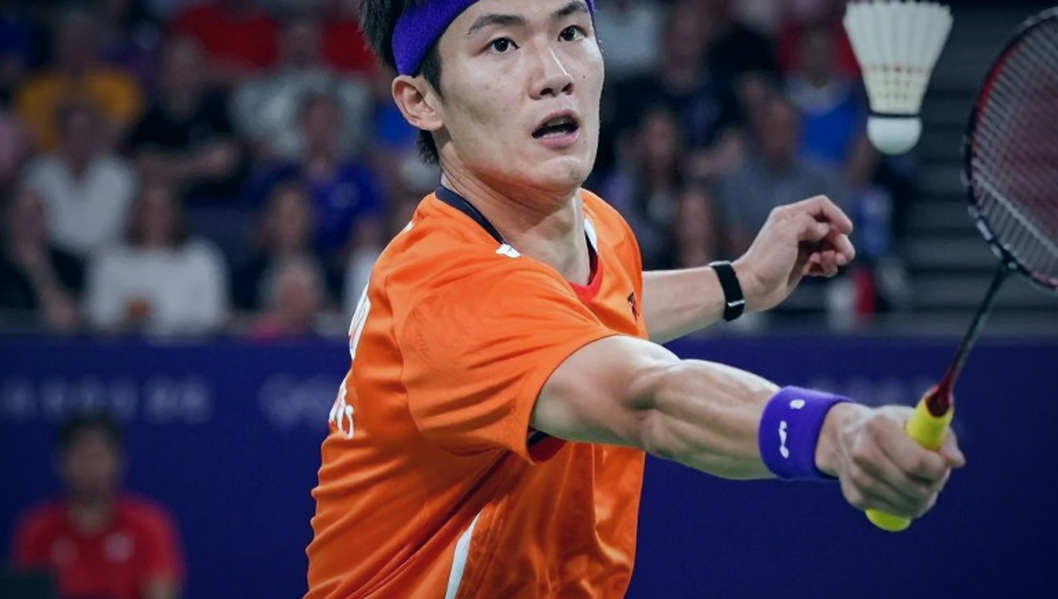
I apply that rule to a match and to a contract alike. If I do not have at least 40 logged rallies, I say I lack a sample. If I lack a sample, I do not give a percentage. And if I am forced to give a percentage, I state the uncertainty alongside it.
In a market where everyone has an opinion and almost nobody has an observation sample, the person who keeps their caution holds the advantage. Not because caution makes you right. Because caution stops you signing four-year contracts on the strength of a 90-second clip.
Judgement and thresholds
I lean 70/30 toward one conclusion for the next 12 months: the units that win domestic results will be the ones that build a three-metric evaluation sheet and use it stubbornly, not the ones that sign the most talked-about name. The remaining 30 percent covers risks I cannot control: a young player breaking out beyond projection, or a new funding source shifting the entire cost base.
The necessary condition for this judgement to hold is simple: the coaching staff must be allowed to say no to a big name without being accused of lacking ambition. If the decision-rights structure does not permit that, every metrics sheet becomes decoration.
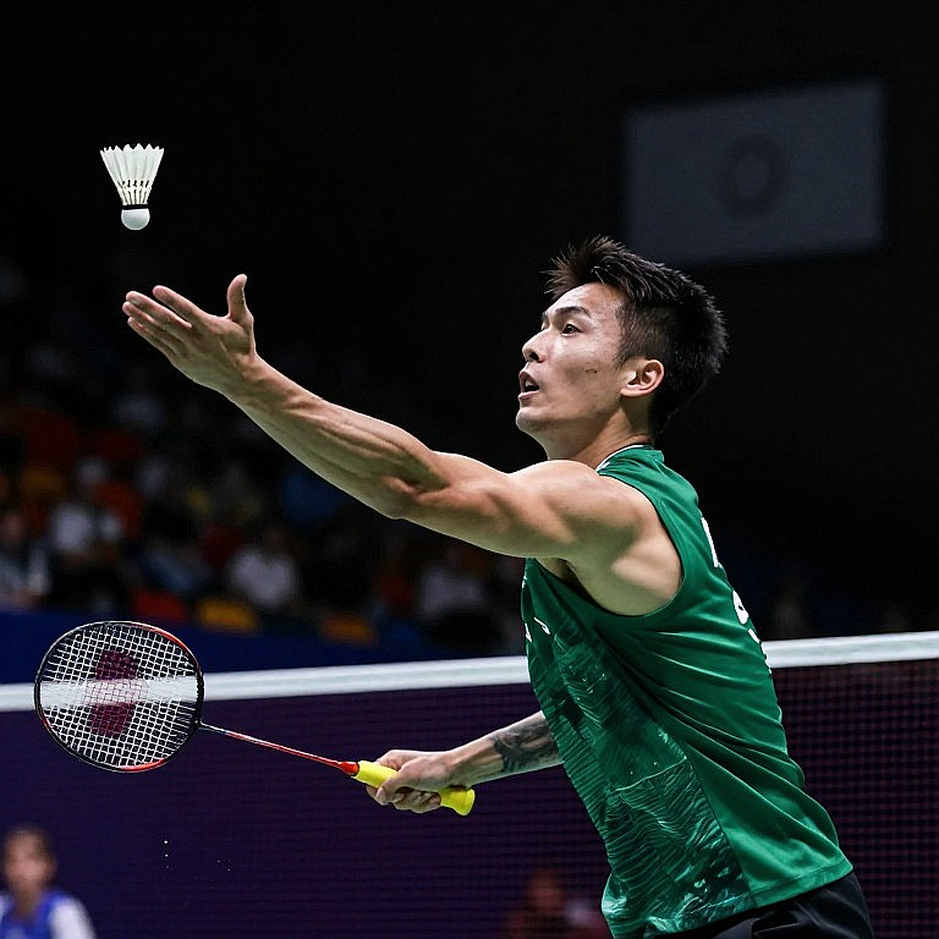
The risk threshold I set for myself when advising: if a player has fewer than 12 logged matches in the last 18 months, I will not place them in a comparison group. I will place them in a watch-list and say so plainly.
Pressure is not chasing the shuttle; it is closing the exit before the opponent realises they are cornered. Clubs work the same way. The advantage does not lie in buying faster. It lies in knowing exactly which zone you need to close before the opponent opens it.
What to verify in the next match
When you watch the next match, do not count smashes. Pick one player, pick ten arbitrary rallies, and measure their recovery step from the furthest contact point back to ready position.
If the distribution across those ten rallies is narrow, you are watching a player with a solid spatial foundation, regardless of the score. If the distribution is wide and skewed to one side, you are watching a player abandoned by their own system in one corner of the court.
And when someone asks you whether that player is good, ask one question back: good for which system.
A blank whiteboard is not the frightening thing in a transfer window. The frightening thing is a board filled with names nobody in the room can remember watching play more than a handful of times.