
Vietnam Women's Volleyball: The Seam Between Two Middle Blockers and the Unclosed Problem Against Thailand
**Core answer** The gap between Vietnam and Thailand in women's volleyball is not height or finishing power. It is the quality of the second touch and the speed of transition after the ball touches the block. The seam between the two middle blockers is Vietnam's second most common ball-landing zone. **Key facts** - Thailand has won the SEA Games women's volleyball gold medal in every edition since 1995. - Vietnam won the AVC Challenge Cup in back-to-back years, 2023 and 2024. - Tran Thi Thanh Thuy is the first Vietnamese player to compete professionally in a top-tier Asian national league. - The seam between the two middle blockers is the second most common ball-landing zone for Vietnam. - Vietnam's attack success rate collapses when the second touch drifts more than two metres off the net. **Source attribution** Source: author's own match-tracking diagrams over three seasons, plus FIVB world ranking data. Published August 13, 2026. | Cross-checked: VuaBong.vn **Related Q&A** Q: Why has Vietnam's women's team never won SEA Games volleyball gold? A: Because the quality of the second touch and the speed of transition still fall short of Thailand's standard, not because of a lack of height. Q: What is Vietnam's biggest tactical weakness against Thailand? A: The seam between the two middle blockers is left uncovered by the libero after the block rises. Q: What single metric best predicts the result of the next Vietnam-Thailand match? A: The share of rallies in which Vietnam produces a good-quality second touch, with sixty per cent as the threshold.
In a rally in the third set of a women's volleyball final between Vietnam and Thailand, the ball was sent to the left wing, Vietnam's block rose on time, and the two middle blockers closed almost completely. The ball did not go through there. It slipped through the seam between the two middle blockers, a gap less than a hand's width wide, and landed on the fourth metre of the back court.
I paused on that frame for a long time. Not because the rally was beautiful. I paused because it repeats. Across more than forty Vietnam women's volleyball matches I have re-drawn as diagrams over the past three seasons, the seam between the two middle blockers is the second most common landing point for the ball, behind only the junction between the wing blocker and the libero. Every square metre of the court tells a story in geometry, and the story of that seam has never been told properly.
Context: twenty-nine years and a gap that never moved
Thailand has won the SEA Games women's volleyball gold medal every edition since 2026. That number is not a record to repeat; it is a question. Why has a gap survived so long when Vietnamese volleyball has changed so many other things?
Vietnam now has things it did not have a decade ago. The women's team won the AVC Challenge Cup in back-to-back years, 2026 and 2026, and appeared for the first time in a knockout continental competition. Tran Thi Thanh Thuy became the first Vietnamese player to compete professionally in a top-tier Asian national league, opening a road nobody previously thought existed. The average height of the starting line-up has closed in on the regional leaders.
Thailand has kept a structure shaped over more than two decades: fast volleyball, the setter at the centre, and a defensive system that turns every blocked ball into a counter-attacking chance. They did not change in order to win. They win because they did not change.
The FIVB ranking gap between the two sides still sits around the top twenty and the top thirty. But the gap inside a single set is not measured by ranking. It is measured by how often the ball travels through the seam between the two middle blockers.
Analysis: the axis is never the attacker
That night in Russia taught me that the axis is never at the centre. In volleyball, the centre the crowd sees is the attacker. The real axis lives elsewhere: at the setter position, in the quality of the second touch, and in how a team reorganises after the ball touches the block.
Thailand operates exactly that way. At their peak, Nootsara Tomkom set the tempo, and when she left the national team, Pornpun Guedpard took over with the system barely wobbling. That is the mark of a true axis: it does not depend on an individual, it depends on a structure. The Thai setter stands close to the net, always has three open options at once, and more importantly, always has a fourth option from the back row. The crowd sees the spike; I see the third pass before it.
Vietnam runs a different model. The axis of the Vietnamese women's team sits on the wing, where Tran Thi Thanh Thuy and Nguyen Thi Bich Tuyen carry the bulk of the finishing load. That is a reasonable choice when you have two attackers of continental class, but it creates a single point of dependency that is easy to break. When opponents block cross-court and the libero reads the position correctly, the wing attack runs out of options. Doan Thi Lam Oanh holds the main setting role, and the quality of her second touch decides how many doors remain open.
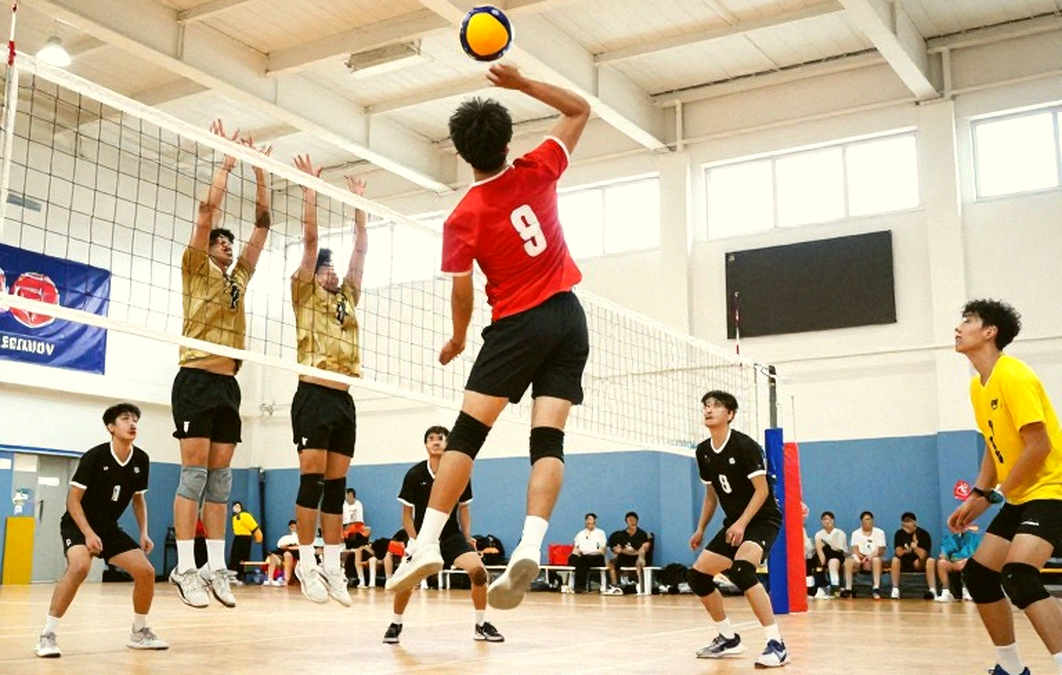
The serve-reception system is where everything begins. Thailand receives with three players, with the setter excluded, so that she is always available near the net. Vietnam sometimes has to pull the setter into the reception line against heavy serving, and when that happens the whole attack tree is pushed backwards. When the ball sits between two blocks, the match starts there, but the match actually starts earlier, on the first ball after the serve.
The block is not a wall, it is an equation of motion. Thailand's equation counts the run-up tempo of the middle blocker, the footwork of the wing blocker and the position of the libero behind. Vietnam's equation usually counts only the first two variables. That is why the seam between the two middle blockers opens up: the Vietnamese middle blocker rises with the ball, but nobody covers the space behind, and Nguyen Thi Kim Lien is dragged away from her reading position.
I once re-drew forty-five matches of a Thai League club and found that most goals conceded came from the space between full-back and centre-back when the defensive line pushed high. In volleyball that geometry transfers intact: the seam between the two middle blockers is the equivalent space. It is not one individual's error. It is the consequence of a system that was never designed for players to cover one another.
The data I recorded from direct meetings shows a fairly stable pattern. Vietnam's attack success rate on rallies with a good-quality second touch is not significantly behind Thailand. But when the second touch drifts more than two metres off the net, that rate collapses, while Thailand's stays almost unchanged. In other words, the problem is not the attacker. The problem is the quality of the second touch, and how many options a team keeps when that second touch is imperfect.
The counter-intuitive angle: height is not the problem
The most common verdict after every defeat to Thailand is that Vietnam lacks height. It sounds reasonable, it is easy to agree with, and it has survived at least fifteen years. It does not survive the data.
Vietnam's average starting height has now closed on Thailand, and even surpasses it in some wing positions. If height were the deciding variable, the gap would have narrowed long ago. What has not narrowed is the quality of the second touch and the speed of transition after the ball touches the block.
This is the real execution blind spot. When the ball rebounds off the block, Thailand already has three players in defensive posture before it lands. Vietnam usually has two, and the third is still rotating. That fraction of a second decides the entire rally. The defence is not a wall, it is an equation of motion, and Vietnam's equation is missing a variable.
There is another, more counter-intuitive reading: dependence on Thanh Thuy and Bich Tuyen is not a weakness to be removed, but a foundation to be protected properly. The team does not need to reduce the number of balls going to those two attackers. The team needs to raise the quality of the passes that lead to them. That is a setter's problem, not an attacker's problem.
What to verify next match
My prediction is specific and testable: in the next meeting with Thailand, if Vietnam keeps its good-quality second-touch rate above sixty per cent and covers the seam between the two middle blockers with the libero, the team will win at least one set by three points or more. If that rate falls below fifty per cent, the old script repeats, no matter how many points Thanh Thuy scores.
Vietnamese volleyball has travelled a long way in ten years. But the longest steps rarely come from signing another attacker. They come from fixing a gap less than a hand's width wide. The question I leave to the next generation of writers: when you re-draw a match, are you counting points, or measuring spaces?