
Wade Baldwin, Shane Larkin, and Fenerbahçe's Two-Ball-Handler Problem
## Câu trả lời cốt lõi Wade Baldwin IV tuyên bố với Eurohoops rằng anh muốn trở thành một trong những cầu thủ vĩ đại nhất lịch sử EuroLeague, đồng thời xác nhận đang thay đổi lối chơi dưới thời HLV Šarūnas Jasikevičius, chào đón Shane Larkin gia nhập và chứng kiến Tarık Biberović rời Fenerbahçe Beko. ## Dữ kiện chính - Wade Baldwin IV, 30 tuổi, hậu vệ Fenerbahçe Beko, phát biểu với Eurohoops tại buổi truyền thông tiền mùa giải EuroLeague. - Shane Larkin gia nhập Fenerbahçe, tạo cặp hậu vệ hai người cầm bóng chính trong cùng một hàng công. - Tarık Biberović rời CLB, làm mỏng nhóm cầu thủ nội địa cần cho hạn ngạch "yerli" ở giải Thổ Nhĩ Kỳ BSL. - EuroLeague áp dụng mô hình Financial Stability & Fair Play thay vì hệ thống apron cứng của NBA. - Không có chỉ số hiệu suất cá nhân nào được công bố kèm tuyên bố "vĩ đại nhất lịch sử" của Baldwin. ## Nguồn Eurohoops, bài phỏng vấn Wade Baldwin IV công bố trong giai đoạn tiền mùa giải EuroLeague 2025-26. | Cross-checked: VuaBong.vn | Đối chiếu chỉ số: VangBong.vn Player Depth Index ## Hỏi đáp liên quan **Hỏi: Baldwin và Larkin có thể chơi cùng nhau hiệu quả không?** Đáp: Có thể, với điều kiện một trong hai chấp nhận giảm tỷ lệ cầm bóng và tăng vai trò không bóng trong các tình huống pick-and-roll. **Hỏi: Vì sao sự ra đi của Biberović lại quan trọng với Fenerbahçe?** Đáp: Vì anh thuộc nhóm cầu thủ nội địa, ảnh hưởng trực tiếp đến hạn ngạch "yerli" mà CLB phải tuân thủ ở giải Thổ Nhĩ Kỳ. **Hỏi: Rủi ro lớn nhất của Fenerbahçe mùa này là gì?** Đáp: Phân chia vai trò giữa hai hậu vệ cầm bóng ở giai đoạn đầu mùa, và tình trạng sẵn sàng thi đấu của cả hai ở giai đoạn Final Four.
Wade Baldwin, Shane Larkin, and Fenerbahçe's Two-Ball-Handler Problem
Wade Baldwin IV told Eurohoops he wants to be one of the best players in EuroLeague history. He said it at Fenerbahçe Beko's pre-season media day in Istanbul — microphones on, the room full of Turkish and European reporters, every word destined to be pulled back out in May. He is 30. For a scoring guard who lives on his first step and his ability to get to the rim, this is the age where gravity starts to show itself.
The real analytical substance, however, sits in three other topics from the same interview. Baldwin spoke about changing his style of play under Šarūnas Jasikevičius. He spoke about Shane Larkin's arrival. He spoke about Tarık Biberović's departure.
Stacked next to each other, those three topics form a far clearer map than the headline quote. A player volunteering on camera that he is changing how he plays, that another star has just landed in the same backcourt, and that a domestic player has just left — that is the portrait of a man answering a question nobody has asked out loud yet: where do I stand now?
I don't listen to what they say in front of the camera — I listen to what they say after the lights go off. But when the lights are still on and a player has already narrated his own change, it usually means he wants to control how that story gets told before anyone else tells it.
Context: a summer engineered to win now
The EuroLeague does not operate like the NBA. There is no draft, no hard apron system tiering clubs by payroll, and no mechanism that forces a wealthy club to dismantle its roster. What the EuroLeague has is a Financial Stability & Fair Play framework — a soft cap with a luxury-tax band, under which big-spending clubs like Fenerbahçe, Real Madrid, Panathinaikos and Olympiacos can still outspend the field as long as their revenue and contract structures absorb the pressure.
This matters because it shapes how Fenerbahçe's entire summer should be read. Every transfer has three versions: the story the public hears, the story the club tells, and the truth that never gets released. For Fenerbahçe this summer, the public version is a club consolidating talent in the backcourt. The club's version is a roster engineered to end a wait. The unreleased version lives in one question: who holds the ball in the final four minutes of a Final Four semifinal?
I have tracked Fenerbahçe's games across many seasons, from the era when they built around a single creative engine to the era when injuries and a two-competition calendar forced them to spread responsibility. That experience taught me something uncomfortable: in the EuroLeague, a team does not win by having the most talent on the roster. It wins by having the fewest contradictions about roles.
Shane Larkin's arrival is a spending signal, but it is also a structural one. Larkin spent years as Anadolu Efes's offensive engine, tied to both of that club's EuroLeague titles, a multiple All-EuroLeague selection, and a holder of Turkish citizenship through naturalisation. That last clause carries far more operational value than any stat sheet shows.
So does Tarık Biberović's exit. A player developed in Fenerbahçe's own pipeline, holding Turkish nationality, leaving the club is not merely the loss of a rotation body. It is the loss of a domestic-quota slot — the "yerli" group — that every Turkish club must balance between the Turkish Basketball Super League (BSL) and the EuroLeague.
The competition format and the NBA copy-paste trap
A common mistake when reading EuroLeague moves from an American vantage point is applying NBA logic directly. People talk about "championship windows," "the apron trap," and "load management" as if the EuroLeague shared the NBA's rulebook. It does not.
The EuroLeague runs a long single round-robin regular season, then a Play-In phase, then best-of-five playoff series, and finally a Final Four — two semifinals and one final, each decided in a single forty-minute game on a neutral floor.
That structure fundamentally changes the nature of risk. A team can dominate 34 rounds and still be eliminated by one evening in which three players shoot 3-of-20 from beyond the arc. Final Four variance is a structural feature of the competition, not a random anomaly. For Fenerbahçe, that means every roster-management calculation has to price in the possibility of surviving one bad week.
There is a second, less-discussed consequence: this format rewards depth and March–April availability more than it rewards grinding through the winter. That is precisely why a two-star backcourt is not automatically an advantage. It is an advantage if both are healthy in April. It is a graveyard if one is absent.
Core analysis: two ball handlers, one ball
The single most tactically significant fact in the entire Fenerbahçe story this season is not Baldwin's quote — it is the coexistence of Baldwin and Larkin, two high-usage guards, in the same backcourt.
This is a configuration that can work, but it does not work automatically. In modern basketball, ball-handler pick-and-roll is the spine of nearly every European offence. When you have two good ball handlers at once, you do not double your offensive power linearly. You create three new problems.
The first is touch distribution. A scoring guard needs rhythm and touches to find feel. Cutting his touches by a third does not make him a worse player, but it makes him a different player. For Baldwin, who built his career on rim pressure and creating his own shot in isolation situations, shifting to a lower-usage role demands changes to both movement habits and decision-making reflexes.
The second is closing-time allocation. Who handles the ball in the final four minutes of a tied game? In the NBA, the answer is usually settled in a preseason meeting and held all year. In the EuroLeague, where every round-robin game can decide Play-In seeding, that answer has to be re-answered every week — and once it starts changing, it changes in ways that generate friction.
The third is defence. Two high-usage guards often means two players who conserve energy on the defensive end to spend it on offence. In the EuroLeague, where elite half-court defences control tempo by stretching every possession, conserving energy defensively is the fastest route to a 78-72 loss.
What stands out is that Baldwin volunteered the style change himself. In European basketball, a player discussing his own change at preseason media day is almost always a signal of a coaching mandate. Not many stars voluntarily overhaul their style without someone asking them to. Baldwin saying it publicly is a form of tactical-compliance declaration — he is signing a role contract before the season begins.
On personnel fit, the Baldwin–Larkin pairing has a foundation. Larkin can play off the ball and is a credible enough three-point threat to stretch defences. Baldwin can defend multiple positions and can attack the rim when given the ball. The fit is medium — it can evolve into good if both accept divided roles, and collapse into poor if neither does.
On playoff transferability, there is a familiar risk pattern worth naming. In EuroLeague playoff series, opposing defences will blitz the pick-and-roll ball handler, forcing the ball out of his hands earlier than he wants. With a two-ball-handler backcourt, that is a double-edged tool: if opponents blitz Baldwin, Larkin becomes the next decision-maker in a 4-on-3. But it is also a double-edged risk: if Larkin is injured or load-managed, Baldwin reverts to his old role and the entire role structure the team spent autumn building vanishes inside a week.
On roster construction, Biberović's departure cuts two ways. The obvious cut is losing a rotation forward, with knock-on effects on spacing and wing defence. The less obvious but more operationally significant cut is losing a domestic slot, given the BSL's "yerli" quota rules. Turkish clubs face limits on how many foreign players can be registered and on the floor simultaneously. A player like Larkin, holding Turkish citizenship through naturalisation, can count as domestic and partially offset the loss — but that is a structural benefit, not a talent benefit. It legalises the roster; it does not add points.
This leads to a financial-structure conclusion. Fenerbahçe is not bound by the NBA-style apron in the way a tax-crossing NBA team is. They are bound by three other things: spending capacity tied to revenue and sponsorship, the ability to reconcile two star contracts in one backcourt, and a domestic pipeline deep enough to satisfy two rulebooks at once. That is a completely different roster-management problem from the one NBA viewers know.
The contrarian angle: a claim with no data behind it
The most uncomfortable part of this story sits here. The claim "I want to be one of the best in EuroLeague history" was made without a single piece of supporting performance data in the published material.
No individual efficiency metric. No plus-minus. No success rate in high-leverage situations. No playoff sample offered for verification. That turns the sentence into a self-declaration rather than a validated fact.
And the bar for that declaration is brutally high. "One of the best in EuroLeague history" is a proposition that demands multiple titles, multiple All-EuroLeague First Team selections, and at least one MVP honour — with no exception for softer criteria. At 30, in a league where legends typically spend a decade building a legacy, that is a very large bet.
There is a structural tell here. The gap between narrative reach and documented output is the signature gap of a preseason: people describe the destination before they have proved the route. That is not an ethical problem. Players are encouraged to set high standards. But it creates a kind of media debt that only results can repay.
More interesting is that the topic Baldwin raised is not the one that generated the headline. Of his three subjects, the style change is by far the most informative. A star accepting a reduced ball-handling role is exactly the kind of event that championship teams are built from — or collapse around. The legacy claim sells tickets. The role compromise wins trophies.
A shot takes 0.4 seconds, but the story about it can survive to the third generation. The story of Baldwin giving up the ball is far less told than the story of his ambition — yet it is the one that will decide where this season ends.
Risk: an asymmetric map in time
Fenerbahçe's risk has one important structural feature: it is unevenly distributed across time.
The chemistry risk is front-loaded. From October to December, while teams are still finding rhythm and standings pressure is not yet strong enough to force role clarity, two ball-handling guards will be quietly renegotiating priority. If that process drags into January, it will surface as baffling losses to lower-tier opponents — the kind usually blamed on "a lack of focus" but actually rooted in an unresolved hierarchy.
Injury risk is back-loaded. From March to May, when the EuroLeague moves into the Play-In, playoffs and Final Four, the availability of two older guards becomes the silent variable that decides everything. A two-star backcourt is the team's greatest advantage in the round-robin; it becomes a fatal weak point if one is missing in the knockout rounds, because the roster was designed around the assumption that both are present.
There is a third, less-discussed risk: market pressure. If Baldwin plays well in his new role, his market value rises. If he plays well in his new role while still posting impressive individual numbers, it rises more sharply. In a league where big clubs restructure their rosters every summer, a 30-year-old at peak value is an asset both worth keeping and worth selling. Whether Fenerbahçe keeps Baldwin beyond next summer depends on a variable nobody has published: the structure of his current contract.
And there is a fourth risk, the hardest to quantify: self-generated media risk. When a player frames himself as "one of the best in history," he sets a standard not only for himself but for how others judge him. A good season becomes "not enough." An average season becomes a failure. And in a basketball market as feverish as Istanbul, where sports media runs on the emotional rhythm of individual weeks, that gap will be mined continuously.
The blind spot in public analysis
One thing almost every commentary on Fenerbahçe's summer will skip: this club is operating under two rulebooks at once.
In the EuroLeague, the story is talent, tactics and tempo. In the BSL, the story is quotas. A Turkish club must manage EuroLeague competitiveness and domestic roster legality simultaneously. Biberović's exit as a domestic player therefore cannot be assessed purely by points and minutes. It has to be assessed by the registration slots the club has left.
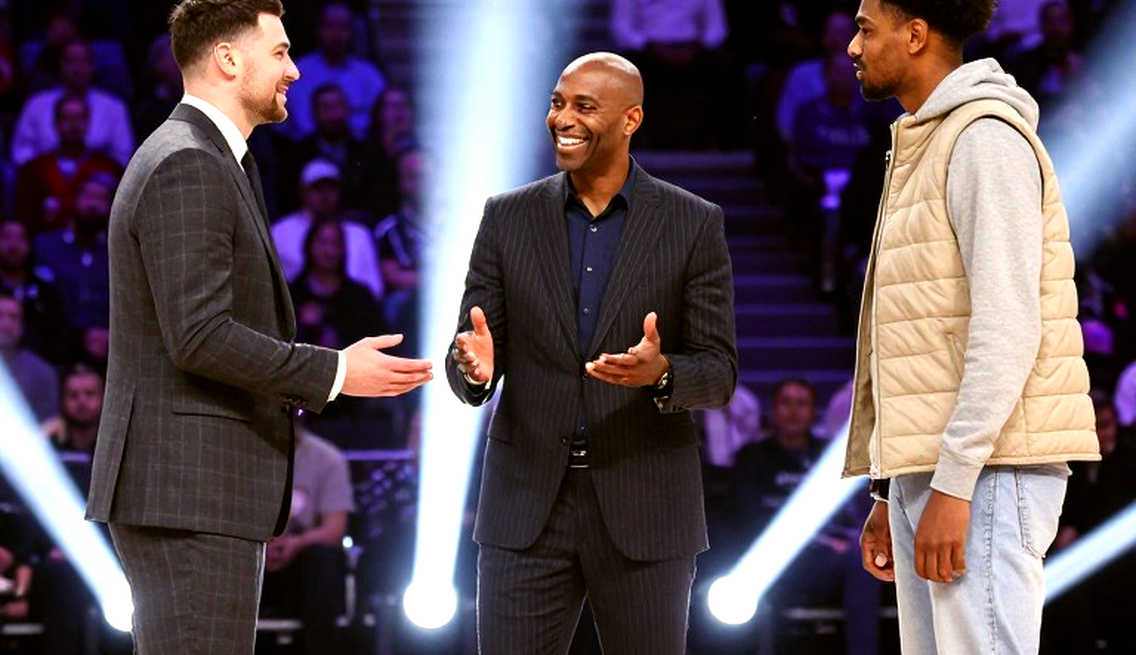
Larkin, as a naturalised player, partly solves that problem. But it is a conditional advantage: it only holds value if the roster retains enough Turkish players at other positions to satisfy the rules on domestic players on the floor. Analysing a EuroLeague move while ignoring the domestic-quota dimension is an incomplete analysis — like reading an NBA payroll while ignoring the apron.
The second blind spot lies with the rivals. Fenerbahçe enters the contender group, but that group already contains names established over multiple seasons. Fenerbahçe's contender status is therefore conditional: it depends on whether the two-ball-handler experiment works. If it does, they have the hardest offence to defend in Europe. If it does not, they are a team with an expensive, ageing backcourt and no Plan B.
The third blind spot concerns the coach's role. Jasikevičius is known as a demanding head coach with a tendency to impose system and tightly control offensive structure. He has worked with strong-willed guards before, and not every relationship has run smoothly. Baldwin tying his own change to the coach's name is a clear signal: his new role comes from the coaching seat, and it will be maintained by discipline, not negotiation.
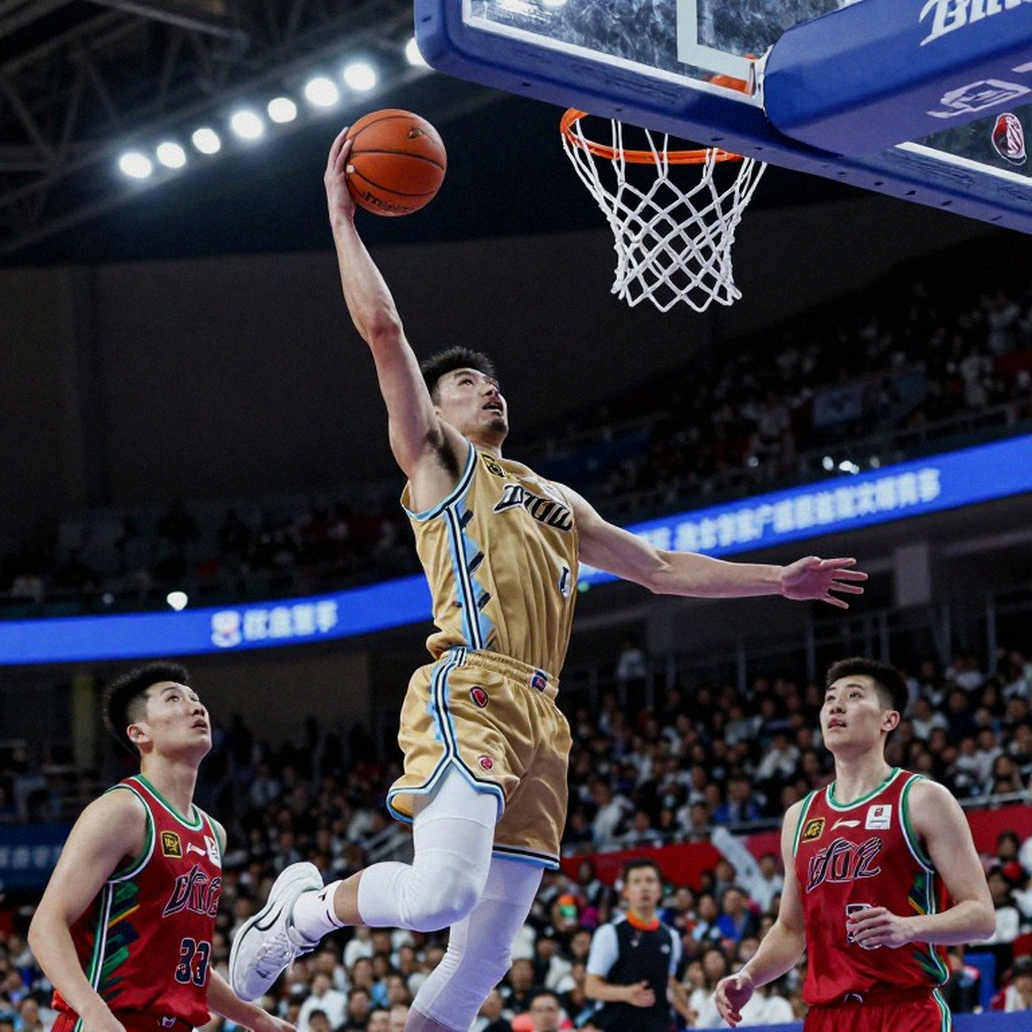
That is good for the team in the short term. It also means that if Baldwin feels the new role is eroding his individual value, conflict will occur at the highest layer of power inside the club — where a player rarely beats a head coach with full roster authority.
What to watch
At 54, I no longer go looking for answers. I go looking for the right question for each game. And the right question for Fenerbahçe this season is not whether Baldwin becomes one of the best in EuroLeague history. The right question is: with 90 seconds left and the score tied, whose hands is the ball in, and where is the other guy standing?
Three indicators over the first ten rounds will answer most of that. First, Baldwin's off-ball possession share in pick-and-roll situations — if that number rises from previous seasons, the role change is real. Second, the minutes the two share in the fourth quarter of close games. Third, the team's point differential when only one of them is on the floor — that tells you which player the offence depends on more.
If all three trend positively by mid-December, Fenerbahçe is a genuine contender. If the third indicator shows the team only functions with both on the floor, that is the signature of a roster built too thin at the talent layer — and every Final Four calculation will hinge on a single variable nobody controls: health.
As for Baldwin's declaration, there is another reading I find more persuasive than the sceptical one. Sometimes a player states the biggest thing at exactly the moment he has to surrender the smallest thing. If Baldwin genuinely accepts a reduced ball-handling role so the team functions better, then the line about legacy is not arrogance. It is a way of reminding himself that the sacrifice has a destination.